
Workplace & Lifestyle
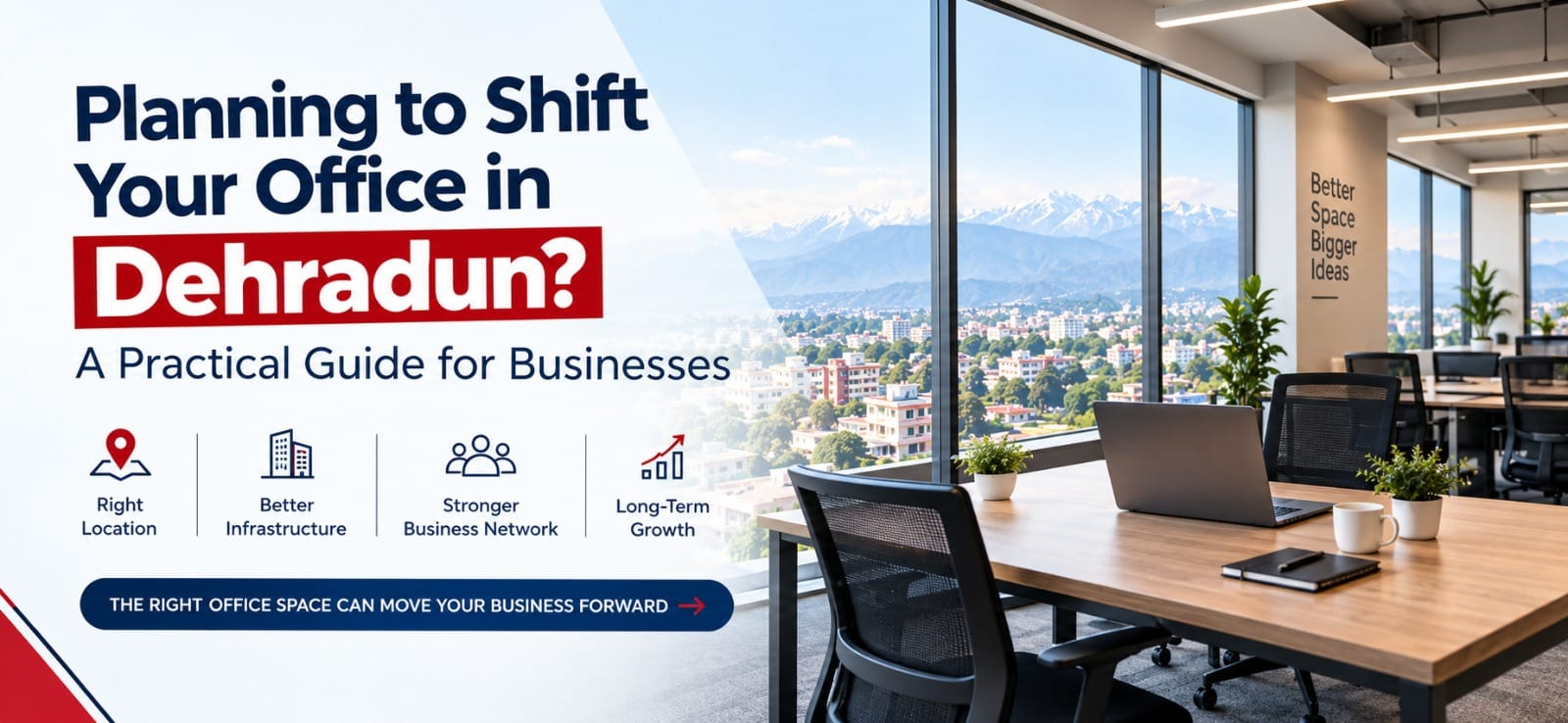
Planning to Shift Your Office in Dehradun? A Practical Guide for Businesses
Moving to a new office is a major decision for any business. Whether your team has outgrown the current workplace, your lease is ending, or you need a location that better suits your employees and clients, an office move requires careful planning.
A well-planned move can help reduce downtime, control unexpected expenses, and make the transition easier for employees, clients, and vendors.
If you are planning to move to new office space in Dehradun, this guide covers the key steps to consider—from defining your requirements and setting a budget to checking the property, reviewing the lease, moving your IT systems, and settling into the new workplace.
Step 1: Define Why You Are Moving
Before looking for a new office, identify what is not working with your current space and what you expect from the new one.
Common reasons for moving include:
- More space: Your team has grown and the current office no longer provides enough room.
- Less space: Your business has adopted hybrid or flexible working and some of the existing space is underused.
- Better accessibility: Employees or clients find the current location difficult to reach.
- Better facilities: The existing office may lack reliable power backup, internet connectivity, parking, or other facilities.
- Lease or cost changes: Your lease is ending or the overall occupancy cost no longer fits your budget.
Turn these reasons into a simple list of must-have and nice-to-have requirements.
It can also help to involve the people who use the office regularly, including team leaders, accounts staff, administration, and IT personnel. They may identify practical requirements such as storage, meeting areas, quiet spaces, additional network points, or better accessibility.
Step 2: Decide What Type of Office Space You Need
Office spaces come in different formats, and the right option depends on your business size, budget, timeline, and operational requirements.
| Office Type | What It Means | May Suit |
| Private Office | A dedicated space for your team, generally occupied under a lease or similar arrangement | Established teams that need privacy and a dedicated workplace |
| Co-working or Shared Space | Desks, cabins, or work areas within a shared facility | Startups, freelancers, and small or flexible teams |
| Ready-to-Use Office | A space with basic furniture or infrastructure already in place | Businesses that want to reduce setup time |
| Bare-Shell Office | An empty unit that can be designed and fitted out | Businesses requiring a customised workplace |
| Branch or Satellite Office | A smaller office used for a regional, sales, or support function | Companies expanding into a new location |
Also consider the flexibility of the lease. A business expecting changes in team size may prefer more flexible terms, while an established business may prioritise longer-term occupancy and predictable costs.
Step 3: Work Out How Much Space You Need
Choosing too little space can lead to another move sooner than expected, while taking more space than necessary can increase your occupancy costs.
Consider the following before finalising the size:
- Current headcount: How many employees need dedicated desks?
- Future growth: How much could the team grow during the expected lease period?
- Meeting requirements: How many meeting rooms or discussion areas will you need?
- Storage: Account for files, equipment, supplies, and other storage requirements.
- Shared areas: Include reception, pantry, break areas, and circulation space.
- Special requirements: Server rooms, training rooms, classrooms, client areas, or other specialised spaces can affect the layout.
If necessary, consult an architect or interior designer to translate your requirements into a practical floor plan before committing to a property.
Step 4: Set a Realistic Office-Moving Budget
Monthly rent is only one part of the cost of moving offices.
Your budget should also account for one-time and recurring expenses such as:
- Security deposit and applicable brokerage or agent fees
- Interior fit-out, partitions, furniture, and electrical work
- Internet, telephone, and IT setup
- Packing, transportation, and equipment insurance
- New stationery, signage, and marketing materials
- Overlapping rent if both offices are occupied temporarily
- Maintenance and common-area charges
- Contingency funds for unexpected expenses
Ask each property owner or manager for a clear breakdown of applicable charges. Comparing properties using the same list of cost items can make the decision easier.
Step 5: Choose the Right Location in Dehradun
Different commercial areas in Dehradun may suit different business requirements.
Rajpur Road is an established commercial corridor with offices, retail, dining, and other businesses. Sahastradhara Road is home to Doon IT Park and has a presence of technology and service businesses. Haridwar Bypass Road also has a range of commercial properties.
When comparing locations, consider:
Staff Commute
Check how easily employees can reach the office and how much time their daily commute will take.
Client Access
If clients regularly visit your office, consider road connectivity, public transport, parking, and the ease of locating the building.
Nearby Services
Food outlets, banks, ATMs, printing services, pharmacies, and other everyday facilities can make an office location more convenient.
Parking
Check how many parking spaces are available and whether visitor parking is provided.
Travel Connections
For businesses with frequent visitors or travelling employees, consider the distance to Dehradun railway station, ISBT, and Jolly Grant Airport.
Whenever possible, visit shortlisted locations at different times of the day. Traffic and parking conditions can change significantly between morning, afternoon, and evening.
Step 6: Evaluate the Office Space Before Signing
Once you shortlist a property, inspect the actual unit rather than relying only on photographs or a floor plan.
Check:
- Power supply and backup arrangements
- Internet providers and connectivity inside the unit
- Water supply and drainage
- Signs of seepage or water damage
- Lifts and staircases
- Accessibility
- Fire safety systems and applicable fire-safety approvals or NOCs
- Security, CCTV, and access-control arrangements
- Applicable building approvals and occupancy-related documents
- Natural light and ventilation
- Space for air-conditioning and other equipment
It is also useful to visit the property more than once if possible. Different times of day can help you understand traffic, noise, lighting, parking, and accessibility conditions.
For more information, read our guide on essential amenities to check before choosing commercial space in Dehradun.
Step 7: Review the Lease Carefully
Do not make a decision based only on the monthly rent. Before signing the agreement, read the terms carefully and consider having a legal professional review them where appropriate.
Confirm important details such as:
- Lease term
- Lock-in period
- Notice period
- Rent and escalation terms
- Security deposit and refund conditions
- Maintenance charges and what they include
- Permission for signage, partitions, and fit-out work
- Responsibility for repairs and utilities
- Applicable property-related charges
- Parking arrangements
- Power backup and other promised facilities
- Renewal conditions
- Subletting provisions
- Early-exit conditions
- Condition in which the premises must be returned
Most importantly, make sure important promises or commitments are included in the written agreement rather than relying only on verbal discussions.
Step 8: Plan the Fit-Out and Office Layout
If the new office requires interior work, begin planning as early as possible. Fit-out work can take longer than expected because of design approvals, material delivery, electrical work, furniture installation, and other dependencies.
Consider:
- Layout: Plan desks, meeting rooms, reception, storage, and pantry areas.
- Electrical and data points: Place sockets and network points according to the actual furniture layout.
- Lighting and ventilation: Make sure the workspace has suitable lighting and airflow.
- Furniture: Decide what can be moved from the old office and what needs to be purchased.
- Landlord approval: Obtain written permission for structural, electrical, signage, or other changes where required.
A detailed plan before construction begins can help avoid unnecessary changes and additional costs later.
Step 9: Create a Moving Timeline
The time required for an office move depends on the size of the business, the condition of the new premises, and the amount of fit-out work required.
A general timeline could look like this:
| Timeline | Key Tasks |
| 8–10 weeks before | Finalise requirements, budget, and property shortlist |
| 6–8 weeks before | Visit properties, review documents, negotiate, and finalise the lease |
| 4–6 weeks before | Plan the layout, begin fit-out, arrange internet and IT services |
| 2–4 weeks before | Inform staff, clients, and vendors; order stationery and signage |
| 1–2 weeks before | Back up data, label equipment, pack items, and arrange transportation |
| Moving day | Move equipment, set up systems, and test essential services |
| First week after | Resolve issues and confirm that the new office is fully operational |
This timeline is only a starting point. Larger offices or spaces requiring extensive fit-out may need additional time.
Step 10: Communicate the Move Clearly
An office move affects employees, clients, vendors, and other business contacts. Communicating the change early can help avoid confusion.
For Employees
- Announce the move date and new address in advance.
- Share parking and commute information.
- Explain any changes to working hours.
- Tell employees how desks and workstations will be assigned.
- Clarify what employees need to pack or move themselves.
For Clients and Vendors
- Share the new address and effective date.
- Provide updated contact information.
- Send a reminder before the move.
- Update the address on invoices, quotations, contracts, and other documents.
For Your Existing Landlord
- Provide notice according to the existing lease.
- Arrange a final inspection.
- Confirm the process for returning keys, access cards, and the security deposit.
Step 11: Plan IT and Data Migration
IT systems can cause significant disruption if they are not planned properly.
Before moving:
- Back up your data: Keep a secure backup before transporting equipment.
- Arrange internet early: New connections may require installation time.
- Map your network: Document how computers, printers, servers, Wi-Fi, and phones are connected.
- Move equipment carefully: Use suitable packaging and insurance where appropriate.
- Test everything: Check internet connectivity, Wi-Fi coverage, phones, printers, and other essential systems before employees arrive.
- Maintain continuity: Where practical, keep the old connection active until the new setup has been tested successfully.
For businesses that rely heavily on cloud systems, servers, customer databases, or specialised software, involve your IT team or service provider early in the process.
Step 12: Update Business Records and Online Listings
Changing your business address can require updates across several systems and records. Depending on your business structure and circumstances, these may include:
- GST registration and tax records
- Company registration details, where applicable
- Shops and Establishments or trade licence records
- Bank accounts
- Insurance policies
- Vendor accounts
- Website
- Email signatures
- Invoices and letterheads
- Google Business Profile and other online business listings
Requirements and deadlines can differ depending on the business and the type of address being changed. Confirm the applicable requirements with your accountant, company secretary, or relevant professional advisor.
Step 13: Plan the Moving Day
A detailed moving-day plan can help reduce disruption. Consider the following:
- Choose a day with relatively low business activity, such as a weekend, where practical.
- Label boxes and furniture by department or workstation.
- Assign one person to coordinate the movers.
- Assign another person to coordinate IT and office setup.
- Keep important documents, cash, and small valuables with responsible personnel rather than placing them in the moving truck.
- Conduct a final inspection of the old office.
- Check that nothing has been left behind.
- Test electricity, internet, phones, printers, and other essential systems before employees return.
Step 14: Settle Into the New Office
The move is not complete simply because the boxes have arrived. During the first few weeks, pay attention to how the new workplace is actually functioning.
You can:
- Collect employee feedback on lighting, noise, layout, and accessibility.
- Resolve issues such as weak Wi-Fi, missing sockets, or furniture problems.
- Confirm that courier and mail deliveries reach the new address.
- Check that your website, business listings, invoices, and contact information show the correct details.
- Return keys and access cards for the previous office.
- Keep records of the final inspection and deposit-related documentation.
Small issues are easier to resolve when they are identified early.
Common Office-Shifting Mistakes to Avoid
Even with careful planning, businesses can overlook important details. Some common mistakes include:
- Choosing an office based only on rent
- Signing a lease without checking relevant approvals and safety requirements
- Underestimating fit-out time and costs
- Arranging internet connectivity too late
- Informing clients and vendors after the move
- Forgetting to update business records and online listings
- Not keeping a contingency budget
- Failing to test IT systems before employees return
- Relying on verbal commitments that are not included in the agreement
A simple checklist can help your team track these tasks throughout the move.
Why Consider WFE City for Your Office Move?
If you are looking for office space in Dehradun, WFE City is a commercial and retail destination located on Rajpur Road near Clock Tower. The development brings together work, retail, dining, and entertainment uses and offers commercial spaces for eligible businesses, subject to availability and applicable requirements.
WFE City highlights facilities including commercial workspace, parking, CCTV surveillance, and high-speed elevators. Its official website also lists businesses across different categories, including established brands, local businesses, and professional services.
For businesses considering a new workplace, the right choice ultimately depends on factors such as space requirements, location, budget, lease terms, accessibility, infrastructure, and the specific needs of the team.
You can explore office space for rent in Dehradun at WFE City or contact the team to enquire about available spaces and arrange a site visit.
Frequently Asked Questions
How early should I start planning an office move?
Many businesses can begin planning around 8 to 10 weeks in advance. Larger teams or offices requiring significant interior work may need more time.
What costs should I consider when shifting offices?
Consider the security deposit, applicable brokerage, interior work, furniture, IT setup, moving and insurance costs, signage, stationery, maintenance charges, and any period when you may need to pay rent for both offices. It is also useful to keep a contingency amount for unexpected expenses.
How do I decide how much office space I need?
Start with your current employee count and expected growth. Then consider meeting rooms, storage, reception, pantry areas, circulation space, and any specialised requirements. An architect or interior designer can help translate these requirements into a practical floor plan.
Do I need to update my GST registration after moving?
If your registered place of business changes, the relevant GST registration details may need to be updated. The exact process and applicable requirements can depend on the circumstances, so confirm them with your accountant or tax professional.
Is ready-to-use or bare-shell office space better?
A ready-to-use office can reduce setup time and may require less initial fit-out work. A bare-shell space provides greater flexibility for businesses that need a customised layout. The appropriate choice depends on your timeline, budget, and workplace requirements.
How can I reduce downtime during an office move?
Back up your data, arrange internet connectivity early, prepare the new IT setup in advance, move on a low-activity day where possible, and test electricity, internet, phones, and other essential systems before employees return.
How can I visit WFE City?
You can contact the WFE City team to enquire about available commercial spaces and request a site visit.
Conclusion
Moving to a new office in Dehradun involves more than finding a suitable property. Businesses need to consider space requirements, budget, location, infrastructure, lease terms, fit-out work, IT systems, employee communication, and business records.
Starting early and using a structured checklist can help reduce unnecessary disruption and make the transition more manageable.
If you are exploring office space in Dehradun, compare properties based on your actual business requirements rather than rent alone. Check the space, understand the agreement, verify the facilities, and confirm important terms in writing before making a commitment.
To explore commercial workspace options in a central Dehradun location, you can visit WFE City on Rajpur Road or contact the team to arrange a site visit.

Rajan
WFECity’s editorial team shares practical insights about office spaces, commercial real estate, amenities and business growth in Dehradun.
You May Also Like
Workplace & Lifestyle
Important Amenities to Check Before Choosing Commercial Space in Dehradun
Sep 21, 2026
Workplace & Lifestyle
Commercial Space for Gyms, Salons, Yoga Studios, and Entertainment Businesses
Sep 19, 2026