
Workplace & Lifestyle
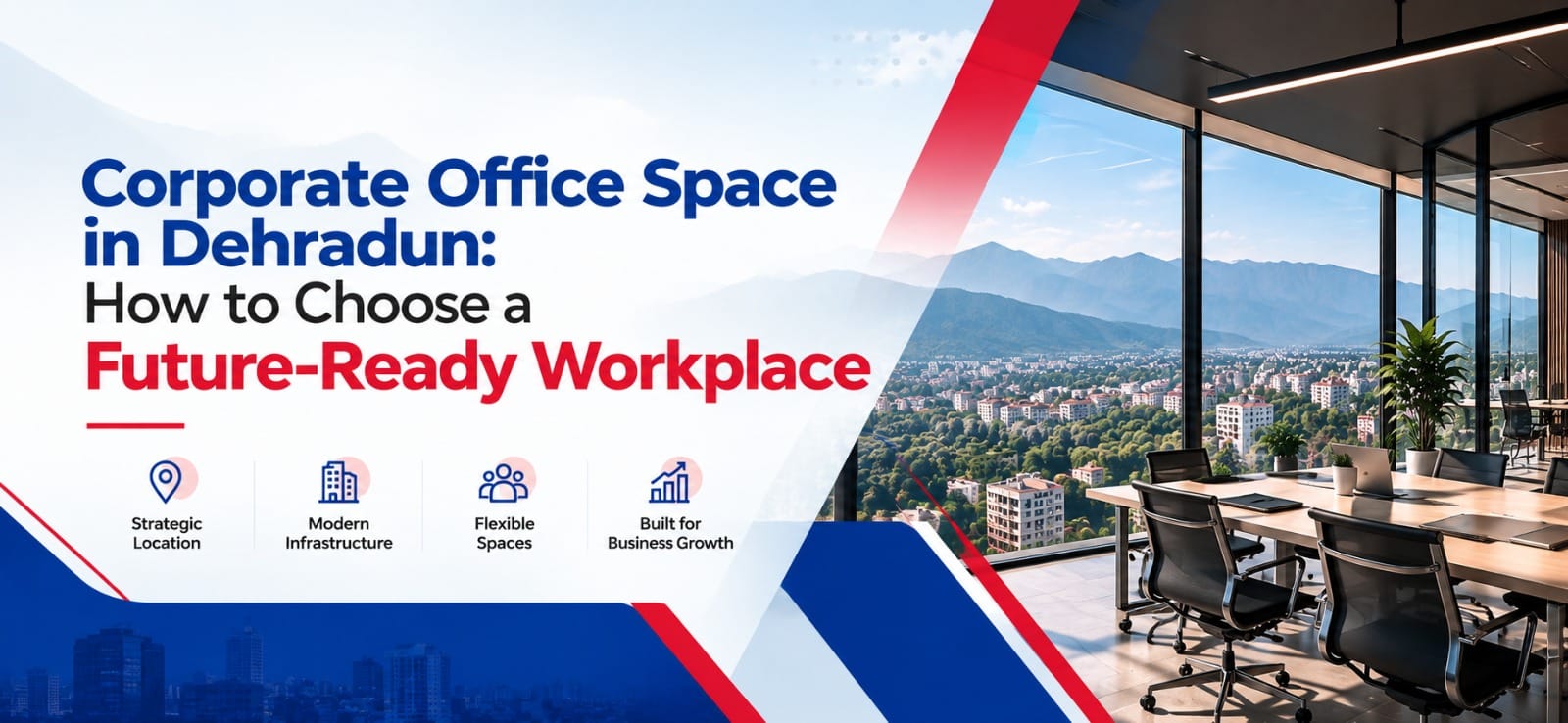
Corporate Office Space in Dehradun: How to Choose a Future-Ready Workplace
A corporate office is more than a place with desks. It shapes how teams work together, how clients see your business, and how easily you can adapt when headcount, technology or working patterns change. Because leases usually run for several years, the space you choose should still work when your business looks different from today.
This guide explains what a “future-ready” workplace means in practical terms and how to assess corporate office space in Dehradun against it. Use it to compare properties, prepare for site visits and ask the right questions before you sign.
What “Future-Ready” Means for an Office
No office can predict every change. A future-ready workplace is one that can adapt without forcing an early move or a major rebuild. In practice, that usually comes down to six things:
- Flexible layout: the space can be rearranged as team size and work patterns change.
- Reliable infrastructure: power, internet and water keep working during disruptions.
- Technology support: the building can handle current and future IT needs.
- Employee comfort: light, air, noise and nearby services support daily work.
- Safety and compliance: approvals, fire safety and security are in place and current.
- Lease flexibility: terms allow for growth, reduction or a change in requirements.
The aim is to reduce the number of things that could force you to move.
Step 1: Start With How Your Business Works
Before you compare buildings, describe how your teams work today and how that may change during the lease.
- Work pattern: fully in-office, hybrid and rotational teams need different amounts of desk space.
- Team size: estimate a realistic range for the next few years, not a single number.
- Type of work: client meetings, calls, training, sales floors and back-office work each need a different layout.
- Client visits: decide how often clients visit and what reception and meeting space they need.
- Data and equipment: servers, secure storage and specialised equipment affect the space and power you need.
Involve team leads, HR, IT and admin in this exercise. They often notice needs that management overlooks.
Step 2: Choose the Type of Space
| Type | What It Means | May Suit |
| Private office | A dedicated unit or floor on a lease | Established teams needing privacy and branding |
| Ready-to-use office | Furnished space with basic setup done | Businesses that want to move in quickly |
| Bare-shell office | An empty unit that you design and fit out | Businesses needing a custom layout |
| Co-working or shared space | Desks or cabins in a shared facility, often with flexible terms | Startups and small or project-based teams |
| Branch or satellite office | A small office for a regional or sales team | Companies entering a new city |
Many businesses use a mix, such as a private core office with flexible space for project teams.
Step 3: Plan a Flexible Layout
Work patterns change faster than leases do, so a layout that can adapt is useful.
- A mix of spaces: open desks, private cabins, meeting rooms and small focus rooms suit different kinds of work.
- Movable furniture and partitions: these let you reconfigure the floor without major construction.
- Open floor plates: fewer columns and obstructions make layouts easier to change.
- Room to grow: ask whether adjoining units or additional floors may become available later.
- Landlord permissions: ask whether partitions and layout changes are allowed, and whether you must restore the space when you leave.
Step 4: Check Power Resilience
Storms and heavy monsoon weather can interrupt electricity in Dehradun. A corporate office should be able to keep running through short outages.
- Backup coverage: confirm whether backup covers your whole unit, including lights, computers, network equipment and cooling, or only common areas.
- Sanctioned load: check that the electrical load suits your equipment now and as you add more.
- Switchover time: ask how quickly backup starts, since sudden power loss can affect servers and unsaved work.
- Billing: confirm how backup power is measured and charged.
- UPS for critical devices: plan uninterrupted power for servers, routers and key equipment.
Step 5: Assess Internet and Technology Infrastructure
Reliable connectivity supports nearly every corporate function, from video calls to cloud software.
- Providers: ask which internet providers serve the building and whether you can bring your own.
- Backup connection: a second line from a different provider can keep you online if one fails.
- Signal testing: test mobile and Wi-Fi signal inside the actual unit, not only in the lobby.
- Cabling and network points: confirm that structured cabling is allowed where you need it.
- IT room: if you have servers, check space, cooling and power for them.
- Installation time: book connections early, since installation at a new address can take time.
Step 6: Plan Meeting and Collaboration Space
Corporate offices are used for client meetings, interviews, presentations and team discussions.
- Meeting rooms: decide how many you need, their sizes and how often they will be used.
- Shared meeting facilities: some buildings offer shared meeting rooms, which can reduce the space you need to lease.
- Video calls: check acoustics, screens and internet reliability in meeting rooms.
- Reception and waiting area: these shape a visitor’s first impression of your business.
- Informal areas: a pantry or break area supports informal conversation and downtime.
Step 7: Consider Employee Comfort
The physical environment affects how people feel at work every day.
- Light and ventilation: natural light and airflow improve comfort and can reduce the need for artificial lighting.
- Temperature control: Dehradun has warm summers and cold winters, so check cooling and heating options.
- Noise: check for road noise, and how the layout separates quiet and busy areas.
- Washrooms and cleanliness: confirm housekeeping frequency and standards.
- Nearby services: food outlets, banks and pharmacies within easy reach save time for staff.
- Commute: a manageable commute supports punctuality and retention.
Step 8: Check Accessibility
An office should be usable by every employee and visitor.
- Step-free access at the entrance, with ramps where needed
- Working lifts, with backup during power cuts
- Accessible washrooms
- Clear signage and safe walking routes
- Parking near the entrance for people who need it
Step 9: Verify Safety, Security and Approvals
These basics should be in place regardless of how the office looks.
- Fire safety: extinguishers, hydrants, sprinklers or smoke detection, marked exits and a current fire NOC.
- Structural safety: Dehradun lies in a high seismic zone, so ask about structural approvals for the building.
- Approvals: the sanctioned building plan, MDDA approvals and the occupancy or completion certificate.
- Security: CCTV, security staff, visitor records and controlled access after hours.
- Document security: lockable storage and restricted access for sensitive areas.
- Emergency planning: clear evacuation routes and an emergency contact process.
Ask to see documents rather than relying on verbal assurance.
Step 10: Look at Running Costs and Sustainability
Energy and water use add to monthly costs, and many companies also want to limit their environmental impact.
- Daylight: good natural light can reduce lighting use.
- Energy efficiency: LED lighting, efficient cooling and sensor controls can lower electricity use.
- Water management: ask about storage, drainage and rainwater harvesting.
- Waste handling: check how the building manages waste and recycling.
- Metering: separate meters for electricity and water make usage easier to track.
Step 11: Choose a Location With People and Clients in Mind
Commercial areas in Dehradun serve different needs. Rajpur Road is one of the city’s main corridors for retail, dining, education and offices. Sahastradhara Road, where Doon IT Park is located, is used by many technology and service firms. Haridwar Bypass Road has larger commercial buildings.
Compare locations on:
- Staff commute: travel time from where most of your team lives.
- Client access: ease of reaching you by road or public transport.
- Parking: slots per unit and availability of visitor parking.
- Travel links: distance from the railway station, ISBT and Jolly Grant Airport if your team travels often.
- Nearby services: food outlets, banks, ATMs and printing shops.
Visit on a weekday morning and evening to see real conditions.
Step 12: Read the Lease With Change in Mind
Lease terms decide how easily you can adapt. Confirm these points in writing.
- Lease duration, lock-in period and notice period
- Rent, yearly escalation and security deposit terms
- Rights to expand, reduce space or sublet
- Permission for signage, partitions and fit-out
- What maintenance charges include, and whether they can change
- Renewal terms
- Condition in which you must return the space
Have a lawyer review the agreement before you sign. For a full walk-through of lease terms, read our office leasing checklist for commercial office space in Dehradun.
Common Mistakes to Avoid
- Choosing an office on rent alone
- Planning only for today’s headcount
- Ignoring power backup and internet redundancy
- Skipping approval and fire NOC checks
- Underestimating fit-out time and cost
- Overlooking exit and expansion terms in the lease
- Not asking staff what they need from the new space
About WFECity
WFECity (Work Food Entertainment City) is a commercial complex on Rajpur Road, near Clock Tower, Dehradun. It offers office space, co-working and private offices, and space suited to coaching and training centres. Listed facilities include internet connectivity, meeting rooms, power backup and 24/7 security. Parking, layout options and availability can vary by unit, so confirm these during a site visit.
You can read more about office space for rent in Dehradun at WFECity.
Frequently Asked Questions
What should I look for in corporate office space in Dehradun?
Check location, power backup, internet, layout flexibility, meeting rooms, safety approvals and lease terms. Also consider staff commute and how much your team may grow.
How much space does a corporate office need?
It depends on headcount, work pattern and the kind of work. Count fixed desks, then add meeting rooms, storage, reception and shared areas. An architect can turn these needs into a floor plan.
Is a flexible or a fixed lease better?
It depends on your business. Flexible terms suit teams whose size may change, while longer leases may suit stable teams that want predictable costs.
How do I plan for hybrid work?
Estimate how many people are in the office on a typical day, and plan shared desks, meeting rooms and quiet spaces accordingly.
Which documents should I check before leasing?
Ask for ownership documents, the sanctioned building plan, the occupancy or completion certificate and the fire NOC. Confirm that the person signing has the authority to lease the space.

Rajan
WFECity’s editorial team shares practical insights about office spaces, commercial real estate, amenities and business growth in Dehradun.
You May Also Like
Workplace & Lifestyle
Commercial Office Space in Dehradun: A Complete Office Leasing Checklist
Sep 23, 2026
Workplace & Lifestyle
Planning to Shift Your Office in Dehradun? A Practical Guide for Businesses
Sep 22, 2026
Workplace & Lifestyle