Workplace & Lifestyle
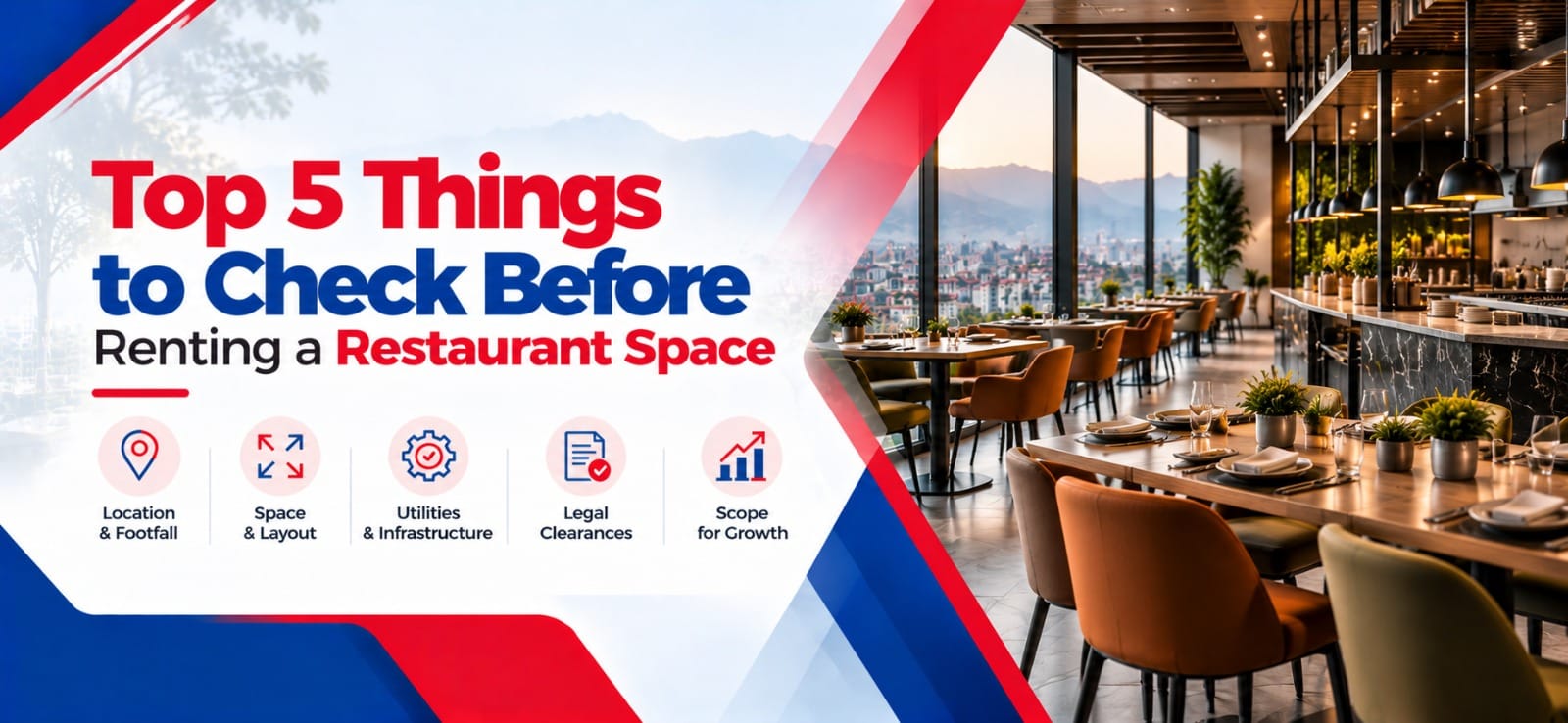
Top 5 Things to Check Before Renting a Restaurant Space
Choosing a restaurant space is one of the biggest decisions an F&B entrepreneur makes before opening the doors. A good menu and strong branding are important, but the property itself can influence customer footfall, kitchen operations, seating capacity, running costs and long-term business potential.
Whether you are planning a café, family restaurant, quick-service outlet or premium dining establishment, the right restaurant space for rent needs to support both the customer experience and the operational side of the business.
For entrepreneurs exploring restaurant space in Dehradun, this decision becomes even more important. Different commercial locations offer different levels of visibility, accessibility, parking, infrastructure and surrounding customer activity.
Before signing a lease, here are five important things to check
1. Location, Visibility and Footfall
The first thing to evaluate is how easily customers can find and reach the restaurant.
A restaurant does not necessarily need to be located on the busiest road, but the location should make sense for your target audience. A café targeting students may require a different catchment area from a premium family restaurant. Location is the biggest driver of walk-in business, so evaluate it carefully.
- Catchment: Who lives, works or studies nearby? Offices, colleges, hospitals, residential societies and tourist routes all bring different kinds of diners.
- Visibility: Can people see your signboard from the road? Ground-floor and first-floor spaces on busy roads advertise themselves. Upper-floor spaces need strong signage and easy access.
- Parking: Diners often choose restaurants where parking is easy. Check space for two-wheelers and cars, and whether valet or street parking is realistic.
- Competition: Visit nearby restaurants at lunch and dinner peaks. A cluster of eateries can signal strong demand, but too many similar concepts can split the crowd.
- Timing check: Visit the location on a weekday, a weekend and in the evening. A street that looks busy in the morning may be quiet at night.
Always match the location to your concept. A quick-service cafe thrives near colleges and offices, while a fine-dining restaurant needs a more upscale, accessible neighbourhood.
2. Layout, Size and Kitchen Suitability
A restaurant is not an ordinary shop or office. It needs a space that supports both a comfortable dining area and a working kitchen.
- Carpet area: Ask for the usable area, not just the built-up area. Plan for seating, kitchen, storage, washrooms and a reception or billing counter.
- Kitchen-to-dining ratio: Many restaurants allocate a significant share of the space to the kitchen and back-of-house. Make sure the property can support this without cutting too deeply into seating.
- Ceiling height: Higher ceilings help with ventilation, heat control and a more open feel.
- Ventilation and exhaust: Check whether a chimney, exhaust duct and fresh-air intake can be installed. Cooking smoke and odour are common causes of neighbour complaints.
- Delivery and storage access: Look for a separate or convenient entry for raw material, along with space for dry storage and cold storage.
- Customer flow: Ensure the entrance, seating, washrooms and billing counter can be arranged logically.
If the space needs heavy structural changes to function, factor that into your budget before you agree to rent.
3. Utilities and Infrastructure
Restaurants consume far more power, water and gas than most other businesses. Confirm these basics before you commit:
- Electrical load: Ovens, refrigeration, AC, lighting and kitchen equipment need adequate sanctioned load. Ask whether it can be increased and who bears the cost.
- Power backup: A generator or inverter support is critical, because outages affect refrigeration and service.
- Water supply and drainage: Reliable water and a proper drainage line are essential. Ask about grease-trap provision for the kitchen.
- Gas supply: Check whether piped gas is available or if cylinder storage is permitted and safely located.
- Fire safety: Look for fire exits, extinguishers, alarms and compliance with building safety norms.
- Waste disposal: Confirm how wet and dry waste will be collected and stored.
- Internet: Billing systems, delivery platforms and online orders all rely on stable connectivity.
If customers have to search for the entrance or cannot see the restaurant from the road, you may need to invest more in signage and local marketing.
4. Licences, Permissions and Legal Compliance
This is the point where many first-time owners get caught out. Before renting, confirm that the property is legally usable for a food business, and that you can obtain the licences you need.
Requirements can vary by location and business type, so verify the current rules with local authorities. Commonly needed items include:
- FSSAI licence or registration for food safety
- Trade licence from the local municipal body
- Fire safety clearance
- GST registration
- Shop and establishment registration
- Liquor licence, if you plan to serve alcohol, which has its own eligibility and distance rules
- Signage permission, where applicable
Also verify that:
- The property has a clear title and the owner is legally authorised to rent it
- The building permits commercial use and, specifically, food service
- Any society or building association rules don’t restrict cooking, late hours or signage
- Property tax and utility bills are cleared, so you don’t inherit dues
It’s a good idea to have a lawyer review the documents. A short consultation is far cheaper than a dispute later.
5. Rent, Costs and Lease Terms
The monthly rent is just the start. Look at the full financial picture and read the lease with care.
Understand the total cost:
- Monthly rent and security deposit
- Maintenance and common-area charges
- Interior, kitchen and equipment fit-out
- Electricity, water and gas bills
- Licences, insurance and renewals
- Pre-launch expenses and marketing
6. Parking and Surrounding Access
Parking is one of the most practical considerations when choosing a restaurant space for rent in Dehradun.
Customers may arrive by car, two-wheelers, taxis or public transportation. If parking is difficult, some customers may choose another restaurant simply because it is easier to access.
Before renting the space, check:
- Dedicated car parking
- Two-wheeler parking
- Visitor parking
- Entry and exit points
- Parking availability during peak hours
- Nearby parking alternatives
- Parking charges, if applicable
Do not evaluate parking only during an off-peak property visit.
If possible, visit around lunch and dinner hours to understand how the area actually functions when nearby businesses are busy.
Check these lease terms:
- Lock-in period: Make sure it’s realistic for a new business, and ask what happens if you need to exit early.
- Rent-free fit-out period: Many landlords allow a few weeks or months of reduced or no rent while you set up. It’s worth asking.
- Rent escalation: Understand the annual increase and whether it’s fixed or negotiable.
- Renewal options: Secure the right to renew so you aren’t pushed out after building a customer base.
- Modification rights: Confirm you can install a kitchen, exhaust, signage, flooring and partitions.
- Handover condition: Note what is included, such as fixtures and fittings, and what must be restored when you leave.
- Subletting and brand changes: Know your rights if you want to rebrand or transfer the business.
As a rule of thumb, rent should stay at a level your projected sales can comfortably support. A cheap rent in a weak location often costs more than a higher rent in a strong one.
Quick Pre-Renting Checklist
- Strong catchment, visibility and parking
- Layout and area suit your concept and kitchen needs
- Ventilation and exhaust options confirmed
- Electrical load, water, gas and drainage verified
- Fire safety and waste disposal arrangements checked
- Property allowed for commercial food use
- Required licences can be obtained
- Total costs calculated, not just rent
- Lease terms, lock-in and renewal reviewed by a professional
Final Thoughts
Choosing a restaurant space is one of the biggest decisions you’ll make as a food entrepreneur. By checking location, layout, utilities, licences and lease terms before you sign, you protect your investment and give your restaurant a stable start.
Visit more than one property, ask detailed questions and never rush a decision. The right space will help your food, service and brand do what they do best.
Frequently Asked Questions
How much space do I need for a restaurant?
It depends on your concept. A small cafe can run in a compact space, while a full-service restaurant needs room for seating, a kitchen, storage and washrooms. Plan the kitchen and dining areas together.
What licences are needed to open a restaurant?
Commonly an FSSAI licence, trade licence, fire safety clearance and GST registration, plus a liquor licence if you serve alcohol. Confirm current requirements with the local authorities.
Should I rent a ground-floor or upper-floor restaurant space?
Ground floors get better visibility and walk-ins. Upper floors can work with strong signage, easy access and a destination-style concept.
What is the biggest mistake when renting a restaurant space?
Focusing only on the rent and ignoring ventilation, utilities, permissions and lease terms.
Can I negotiate the lease terms?
Yes. Rent-free fit-out periods, escalation rates, lock-in terms and renewal options are often negotiable.
Is it better to rent or buy restaurant space?
Most new restaurants rent, because it needs less capital and offers flexibility while the business proves itself.

Rajan
WFECity’s editorial team shares practical insights about office spaces, commercial real estate, amenities and business growth in Dehradun.
You May Also Like

Workplace & Lifestyle
Opening a Clinic in Dehradun: Why Accessibility Matters as Much as Location
Oct 08, 2026