
Amenities & Spaces
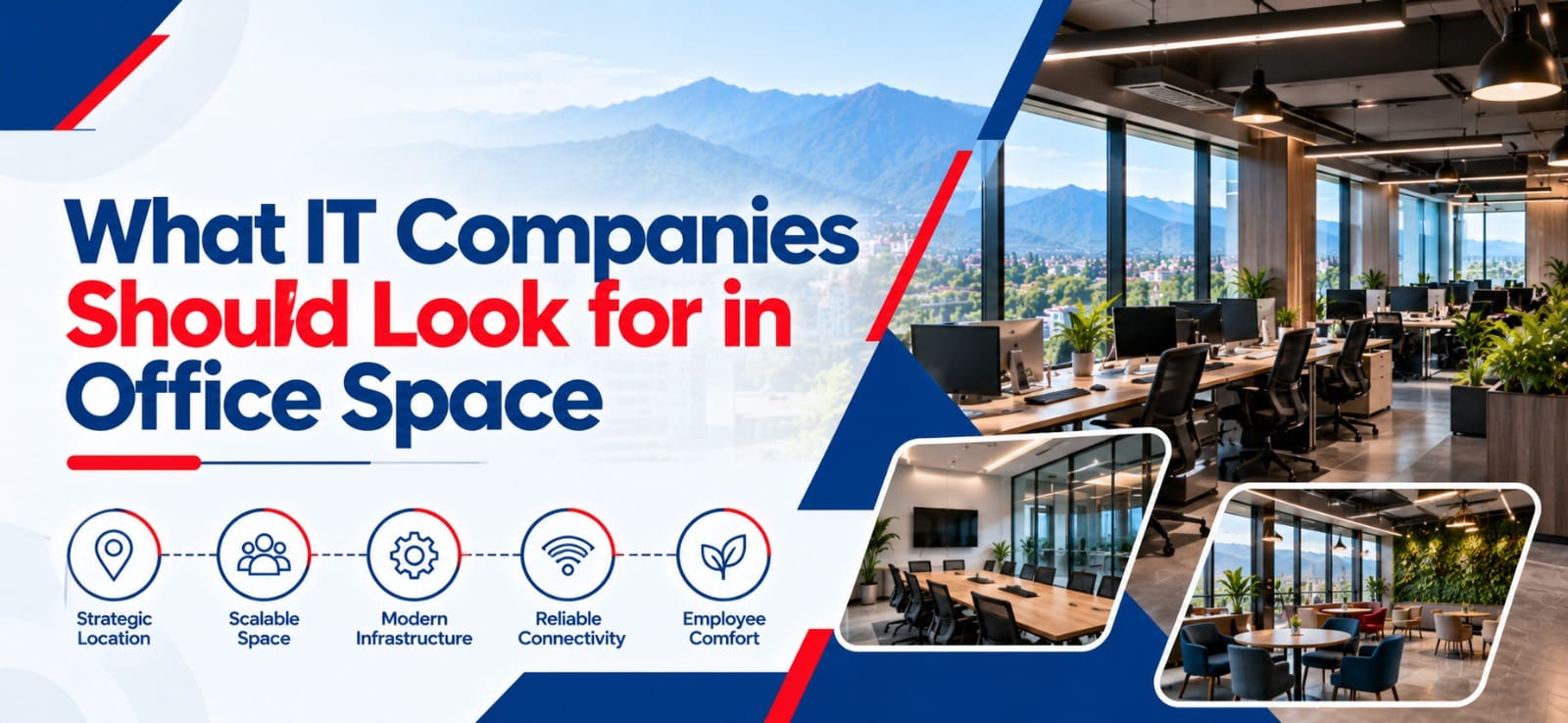
What IT Companies Should Look for in Office Space
Choosing the right office space is an important decision for IT companies planning to establish or expand their operations. The workplace must support reliable technology infrastructure, employee productivity, data security, team collaboration, and future business growth.
For businesses exploring office locations in Dehradun, selecting a suitable commercial property involves more than comparing rental prices. Internet connectivity, power backup, office layout, accessibility, and building infrastructure can directly influence day-to-day operations.
If you are searching for IT Company Space for lease in Dehradun, this guide explains the essential factors to consider before finalising your office location.
1. Reliable Internet Connectivity
Internet connectivity is one of the most important requirements for IT companies. Software development, cloud computing, video conferencing, remote collaboration, and client communication all depend on a stable network connection. Before leasing an office, evaluate the available internet infrastructure and confirm whether service providers can deliver the speed and reliability your business requires.
Consider these factors:
- High-speed broadband: Ensure the available connection supports your team’s daily workload.
- Business internet plans: Compare service-level commitments, technical support, and installation charges.
- Multiple providers: Check whether alternative internet service providers are available in case your primary connection fails.
- Network infrastructure: Assess the availability of structured cabling, network racks, and suitable equipment locations.
- Wi-Fi coverage: Plan for reliable wireless connectivity throughout the office.
- Video conferencing: Make sure the connection can support simultaneous meetings and collaboration tools.
Companies handling sensitive workloads or operating critical applications may also need dedicated connectivity, redundant network links, and additional network security measures.
2. Uninterrupted Power Supply and Backup
IT offices depend on electricity to operate computers, servers, networking equipment, cooling systems, and other essential devices. Unexpected power interruptions can disrupt meetings, delay development work, and affect business continuity. When evaluating an office property, check the available electrical infrastructure and backup arrangements.
Important considerations include:
- Power backup: Confirm which areas and electrical systems are supported during an outage.
- Electrical capacity: Ensure the supply can accommodate computers, workstations, servers, air conditioning, and future equipment.
- UPS requirements: Determine whether individual workstations or critical equipment need uninterrupted power supplies.
- Server and network support: Check whether essential networking equipment can remain operational during power interruptions.
- Maintenance arrangements: Understand how electrical faults and backup-system issues are handled.
- Cooling requirements: Confirm that server rooms or other equipment areas can maintain suitable operating temperatures.
If your company plans to operate an on-site server room, conduct a technical assessment before leasing the property. The electrical load, cooling requirements, backup capacity, and fire safety provisions must match your planned infrastructure.
3. Office Layout and Space Planning
The office layout should support your company’s working style, team structure, and operational requirements. A software development company, an IT support centre, and a business process outsourcing operation may have different space requirements. Planning the layout in advance can help avoid overcrowding and unnecessary renovation expenses.
Consider the following areas:
- Workstations: Provide sufficient desk space, comfortable seating, and appropriate access to power and network connections.
- Meeting rooms: Include spaces for internal discussions, client meetings, interviews, and project reviews.
- Collaboration areas: Create suitable areas for brainstorming, team discussions, and informal communication.
- Private offices: Consider whether managers, HR teams, or client-facing employees need dedicated rooms.
- Reception area: A professional entrance can help create a positive impression on visitors and business partners.
- Equipment and storage areas: Allocate space for networking equipment, office supplies, and other operational requirements.
- Breakout areas: Employee rest areas can improve workplace comfort and help teams take breaks during demanding workdays.
Before signing a lease, compare the usable carpet area with your expected headcount. Include circulation space, meeting rooms, storage, and shared facilities in your calculations rather than estimating capacity from the total advertised area alone.
4. Location and Employee Accessibility
The office location can influence employee commuting, recruitment, client visits, and overall workplace convenience. IT companies should assess whether employees can reach the office conveniently and whether the surrounding area supports their everyday needs.
Evaluate the following factors:
- Road connectivity: Check access to major roads and important commercial areas.
- Public transportation: Consider the availability of transport options for employees who do not drive.
- Parking: Assess whether parking facilities are sufficient for employees and visitors.
- Nearby amenities: Restaurants, cafes, convenience stores, and other everyday services can improve workplace convenience.
- Recruitment potential: Consider whether the location is practical for employees travelling from different parts of the city.
- Client accessibility: If clients regularly visit your office, evaluate how easy the premises are to find and access.
Dehradun businesses should compare locations based on their actual workforce, customer base, and operational requirements instead of relying only on a property’s reputation or address.
5. Scalability and Future Expansion
An office that suits your current team may become unsuitable as your company grows. IT businesses can experience changes in headcount, project requirements, equipment needs, and departmental structure. Choosing a flexible office space can help reduce the disruption associated with future expansion.
Before leasing a property, consider:
- Whether additional workstations can be accommodated.
- Whether the layout can support new departments or project teams.
- Whether meeting rooms can be added or reconfigured.
- Whether the electrical and network infrastructure can support additional equipment.
- Whether larger or adjacent units may become available.
- Whether the lease permits expansion, renewal, or relocation under clear conditions.
Estimate your potential space requirements over the next two to three years. Although growth projections are uncertain, planning ahead can help you avoid committing to a property that becomes restrictive too quickly.
6. Security and Data Protection
IT companies may handle proprietary software, customer information, financial records, and other sensitive business data. Office security should therefore be considered alongside connectivity and physical infrastructure. Evaluate both the building’s security arrangements and the internal security measures your company will need.
- Physical security: Check building access controls, visitor management, security personnel where available, and arrangements for after-hours entry.
- Network security: Plan for secure Wi-Fi, firewalls, network segmentation, and appropriate access controls.
- Equipment protection: Identify secure locations for laptops, networking equipment, servers, and other valuable assets.
- Privacy: Consider whether meeting rooms and work areas provide sufficient confidentiality for client discussions.
- Backup and recovery: Establish appropriate procedures for data backup, disaster recovery, and business continuity.
- Compliance: Assess whether the property and your planned infrastructure can support the security or regulatory requirements relevant to your industry and clients.
A commercial building’s security provisions do not replace your company’s own cybersecurity policies. Evaluate both independently before moving into the office.
7. Evaluate the Complete Cost of Leasing an Office
Rental price is only one component of office occupancy costs. Additional expenses can significantly affect your budget, especially when the property requires interior work or technical upgrades.
Before signing a lease, calculate the total cost of occupying and operating the office.
| Cost component | What to check |
| Monthly rent | Base rent and payment schedule |
| Security deposit | Deposit amount and refund conditions |
| Maintenance | Common-area maintenance and building service charges |
| Utilities | Electricity, water, and other applicable charges |
| Internet | Installation, recurring plans, and backup connectivity |
| Interior fit-out | Partitions, workstations, meeting rooms, and cabling |
| Power backup | UPS equipment and other backup requirements |
| Parking | Included spaces and additional charges |
| Lease escalation | Scheduled rent increases |
| Exit costs | Restoration obligations and termination conditions |
Compare properties using the estimated total monthly occupancy cost rather than the advertised rent alone. It is also important to review the lease duration, notice period, renewal terms, and responsibility for repairs. A lower rental price may not provide better value if the office requires substantial infrastructure investment.
8. Building Facilities and Employee Comfort
A suitable workplace should support both business operations and employee well-being. Long working hours, collaborative projects, and demanding deadlines make a comfortable environment especially valuable for technology teams.
Before choosing an office, assess:
- Reliable lifts and convenient building access where applicable.
- Clean and well-maintained washrooms.
- Suitable lighting and ventilation.
- Effective air conditioning.
- Clean common areas.
- Drinking water and pantry facilities where available.
- Parking and visitor access.
- Security and building maintenance.
- Facilities for employees with accessibility requirements.
Check the condition of these facilities during a physical site visit. Also clarify which services are included in the rent and which may involve additional charges.
9. Meeting Rooms and Collaboration Infrastructure
IT companies frequently conduct project discussions, client presentations, recruitment interviews, training sessions, and remote meetings. The office should provide suitable spaces for these activities without disrupting employees working at their desks. Consider whether the property can accommodate:
- Client meeting rooms: Professional spaces for presentations, negotiations, and project updates.
- Video conferencing facilities: Rooms with suitable acoustics, lighting, network connectivity, and power outlets.
- Training areas: Flexible spaces for onboarding, technical workshops, and internal learning.
- Quiet work areas: Spaces where employees can concentrate on complex tasks without frequent interruptions.
- Team collaboration zones: Areas that encourage communication between departments and project teams.
If the property does not already include suitable meeting facilities, estimate the cost of creating them before making a leasing decision.
10. Review the Lease Agreement and Permitted Use
Even when a property meets your technical and operational requirements, its lease terms must also suit your business. Read the agreement carefully before making a financial commitment.
Pay particular attention to:
- Permitted use: Confirm that IT office operations are allowed in the premises.
- Lease duration: Check the contract period and renewal conditions.
- Rent escalation: Understand when and how rental increases will apply.
- Maintenance responsibilities: Identify which repairs and services are the landlord’s responsibility.
- Fit-out permissions: Confirm whether you can install partitions, cabling, equipment racks, and other office infrastructure.
- Signage: Check the rules governing company signs and branding.
- Access hours: Verify that the building accommodates your intended working schedule.
- Termination conditions: Understand the notice period, early-exit provisions, and deposit refund terms.
If your company requires a dedicated server room, extensive electrical upgrades, or specialised cooling systems, obtain written approval for the proposed modifications. A legal professional can help review the agreement and identify terms that may create unnecessary financial or operational risks.
Why Consider WFECity for IT Office Space in Dehradun?
Choosing the right commercial location is an important step for IT companies establishing or expanding their operations in Dehradun. WFECity, located on Rajpur Road near the Clock Tower, is a commercial development that businesses can consider when exploring office and commercial leasing options.
Before selecting a unit, IT companies should assess its suitability against their technical requirements and planned workforce. When evaluating an office at WFECity, discuss the following with the leasing team:
- Available office units and usable carpet area.
- Rental terms, security deposit, and maintenance charges.
- Internet service provider availability and connectivity options.
- Electrical capacity and the scope of power backup.
- Parking, building access, and available common facilities.
- Permission for workstations, network cabling, meeting rooms, and other fit-outs.
- Suitability for your intended office operations and future expansion.
Do not assume that every unit provides identical infrastructure. Confirm the actual facilities, technical specifications, availability, and permitted use of the particular space before signing a lease.
If you are looking for IT Company Space for lease in Dehradun, visit the official WFECity website to explore its commercial property offerings and contact the team to discuss your office requirements.
Frequently Asked Questions
1. What is the most important factor when choosing office space for an IT company?
Reliable internet connectivity, adequate power infrastructure, a suitable office layout, and a convenient location are among the most important factors. The exact priorities depend on your company’s workload, headcount, and technical requirements.
2. How much office space does an IT company need?
The required area depends on employee headcount, workstation density, meeting rooms, common areas, equipment, and future growth plans. Prepare a space plan based on your current team and expected expansion before comparing properties.
3. Why is power backup important for IT offices?
Power backup helps reduce interruptions during electricity outages. IT companies should assess whether backup systems support essential equipment, networking infrastructure, lighting, and other operational requirements.
4. Should IT companies prioritise location or rental cost?
Both matter, but the decision should consider total occupancy cost, employee accessibility, technical infrastructure, and business requirements. A cheaper office may become more expensive if it requires significant upgrades or creates operational difficulties.
5. What should IT companies check before signing an office lease?
Review permitted use, rental terms, deposit conditions, rent escalation, maintenance charges, internet availability, electrical capacity, fit-out permissions, access hours, and termination clauses.
6. Is Dehradun suitable for establishing an IT office?
Dehradun may be worth considering for companies evaluating office locations outside larger metropolitan centres. Businesses should assess local talent availability, connectivity, operating costs, recruitment needs, and client requirements before making a decision.
7. Where can companies find IT office space for lease in Dehradun?
Companies can compare commercial properties based on location, infrastructure, rental terms, and expansion potential. WFECity is one option to explore when evaluating office space in Dehradun. Contact its leasing team to confirm current availability and unit-specific facilities.
Conclusion
Selecting office space is a strategic decision for every IT company. Reliable connectivity, sufficient power capacity, flexible layouts, employee accessibility, security, and transparent rental terms can all influence the success of your workplace.
Before signing a lease, assess your current requirements, plan for future growth, calculate the complete occupancy cost, and verify the technical suitability of the property.
If you are exploring IT Company Space for lease in Dehradun, consider the commercial property options at WFECity and discuss your requirements with the leasing team to identify a suitable office for your business.

Rajan
WFECity’s editorial team shares practical insights about office spaces, commercial real estate, amenities and business growth in Dehradun.
You May Also Like

Amenities & Spaces
Opening a Clinic in Dehradun: Why Accessibility Matters as Much as Location
Oct 08, 2026