Growth & Trends
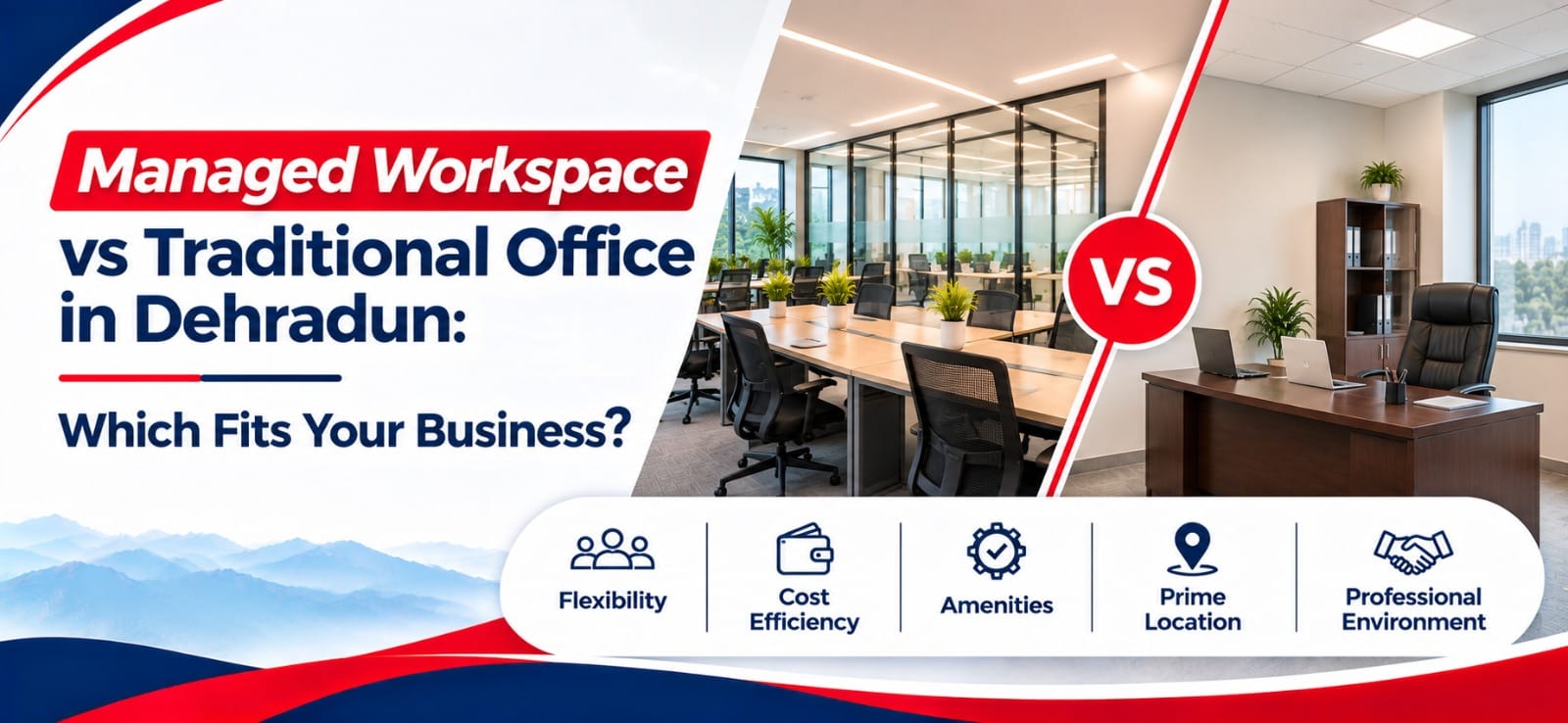
Managed Workspace vs Traditional Office in Dehradun: Which Fits Your Business?
Choosing the right office environment is an important decision for any business. Whether you are launching a startup, expanding an existing company or establishing a professional presence in a new city, your workspace can influence operating costs, employee productivity and long-term business growth.
As Dehradun continues to develop as a commercial destination, businesses are exploring different office arrangements to meet their operational requirements. Traditional offices remain a popular choice for companies that prefer complete control over their workspace, while managed workspaces are attracting attention for their convenience, shared infrastructure and professional environment.
For startups, IT companies, consultants, digital marketing agencies and growing enterprises, choosing between these two options requires a clear understanding of their differences.
A managed workspace in Dehradun can be an attractive option for businesses looking for a professionally maintained commercial environment without independently managing every aspect of their office infrastructure. But is a managed workspace always better than a traditional office? The answer depends on your business size, budget, operational requirements and future plans.
In this guide, we compare managed workspaces and traditional offices to help you understand which option may be more suitable for your business in Dehradun.
What Is a Managed Workspace?
A managed workspace is a commercial office environment where certain building facilities, infrastructure and common-area services are professionally managed by a property operator or workspace provider. Instead of independently arranging every aspect of the premises, businesses can access an established commercial environment with facilities such as security, parking, elevators, power backup and maintained common areas.
Depending on the provider and agreement, additional services may also be available. Managed workspace arrangements can vary significantly. Some providers offer fully furnished offices with operational support, while others provide customisable commercial units within a professionally managed complex.
For businesses, the main advantage is the opportunity to operate from an organised commercial environment while reducing the need to independently manage certain property-related responsibilities.
What Is a Traditional Office?
A traditional office generally refers to a commercial space rented or leased directly by a business for its own operations. The company has greater control over how the office is designed, organised and used, subject to the lease agreement and applicable building rules. Businesses renting traditional offices may need to independently arrange:
- Interior design and office furnishing.
- Workstations and meeting rooms.
- Internet connectivity.
- Electricity and equipment.
- Office maintenance.
- Security arrangements.
- Housekeeping and other operational services.
Traditional offices can be suitable for companies that require a dedicated workspace, specific infrastructure or complete control over their internal office environment. However, the responsibilities and expenses associated with setting up and maintaining the office should be considered before making a decision.
Managed Workspace vs Traditional Office: Key Differences
Both workspace models have advantages, but their suitability depends on what a business expects from its commercial premises.
Here is a comparison of the two options.
| Comparison Factor | Managed Workspace | Traditional Office |
| Infrastructure | Shared or managed building infrastructure | Arranged according to business requirements |
| Maintenance | Common facilities generally managed by the operator | More direct tenant involvement |
| Office Customisation | Depends on unit and agreement | Greater internal design flexibility |
| Security | May include building-level arrangements | Depends on building and tenant arrangements |
| Parking | Shared facilities may be available | Depends on the property |
| Initial Setup | Can reduce some setup responsibilities | May require additional setup investment |
| Flexibility | Depends on available units and terms | Depends on lease and property conditions |
| Operational Control | Shared building management | Greater control over internal operations |
| Best Suited For | Businesses seeking managed infrastructure | Businesses requiring a dedicated environment |
The exact facilities, responsibilities and costs vary between properties. Always compare the actual agreement rather than relying only on the workspace category.
1. Cost and Budget Management
Cost is one of the most important factors when choosing an office. Businesses should look beyond monthly rent and calculate the complete cost of occupying and operating the workspace.
Managed Workspace
A managed commercial environment may provide access to common infrastructure such as elevators, security, parking and power backup. This can reduce the need for businesses to arrange certain building-level facilities independently.
Depending on the agreement, businesses may also benefit from predictable maintenance arrangements. However, some services may involve separate charges. Therefore, it is important to understand what is included in the rental or leasing arrangement.
Traditional Office
A traditional office may offer greater control over the setup, but businesses may need to spend separately on interiors, furniture, internet connections, equipment and ongoing maintenance. These additional expenses can increase the initial investment required to make the office operational.
Which Is Better?
A managed workspace may be worth considering if your business wants access to established infrastructure and professionally maintained common facilities. A traditional office may be more suitable if you have the resources and preference to manage your own setup.
2. Flexibility and Customisation
Every business has different workspace requirements. An IT company may need dedicated workstations and server infrastructure, while a consulting firm may prioritise private cabins and meeting rooms.
Managed Workspace
Many managed commercial properties offer customisable office units, allowing businesses to plan their layouts according to operational needs. However, modifications may depend on the unit, building infrastructure, technical feasibility and approval requirements.
Traditional Office
Traditional offices generally provide more freedom to organise the internal layout, subject to the landlord’s permissions and applicable building regulations. Businesses can plan workstations, cabins, meeting rooms, reception areas and storage according to their preferences.
Which Is Better?
If your business requires a customised internal layout but wants professionally managed common infrastructure, a managed commercial property with customisable units may provide a suitable balance.
3. Maintenance and Daily Operations
Office maintenance is an important responsibility that can affect business operations. Companies need to ensure that their employees have access to clean, secure and functional working environments.
Managed Workspace
A managed commercial complex generally has arrangements for maintaining common areas and shared building facilities.
These may include:
- Elevators and common corridors.
- Security and CCTV surveillance.
- Shared washrooms.
- Parking areas.
- Common lighting and infrastructure.
- Building-level maintenance.
The actual scope of services depends on the property’s management arrangements.
Traditional Office
Businesses occupying traditional offices may need to coordinate more maintenance activities themselves, depending on their lease agreement. This could include housekeeping, repairs, equipment maintenance and coordination with service providers.
Which Is Better?
A professionally managed commercial environment can reduce the time businesses spend coordinating common-area maintenance, allowing management teams to focus more on their core activities.
4. Location and Business Accessibility
Location plays an important role in the success of a commercial office. An accessible workspace can make daily commuting easier for employees and improve convenience for clients and visitors.
Managed Workspace
Managed commercial destinations are often located in established commercial areas and may offer access to shared facilities, parking and other businesses. A recognised commercial address can also support business visibility.
Traditional Office
Traditional offices are available across different commercial and business locations. Companies can select a property based on their preferred neighbourhood, rental budget and operational requirements. However, accessibility and infrastructure can differ considerably between buildings.
Which Is Better?
The better option is the one that provides suitable connectivity for employees, clients and business operations. Evaluate the actual location instead of choosing a workspace only because it is managed or traditional.
5. Employee Experience and Productivity
Your workspace affects how employees communicate, collaborate and perform their daily responsibilities. A suitable office should provide a comfortable environment with sufficient space, lighting, ventilation and essential facilities.
Managed Workspace
A professionally maintained commercial environment may provide shared facilities and organised common areas. Some developments also bring different businesses, restaurants and retail establishments together, creating a more active commercial environment.
Traditional Office
Traditional offices allow companies to design their working environment around their internal culture. Businesses can create dedicated collaboration areas, private cabins, employee lounges and meeting rooms according to their requirements.
Which Is Better?
The ideal choice depends on your employees’ working style. Businesses should prioritise comfort, functionality and accessibility rather than focusing only on the appearance of an office.
6. Security and Infrastructure
Reliable infrastructure is essential for uninterrupted business operations. Companies should evaluate security arrangements, electricity supply, backup systems, fire safety and internet connectivity before selecting a workspace.
Managed Workspace
A managed commercial complex may provide building-level facilities such as:
- Controlled entry and exit arrangements.
- CCTV surveillance.
- Security personnel.
- Fire safety infrastructure.
- Elevators.
- Power backup.
- Parking facilities.
These facilities can support a more organised working environment.
Traditional Office
In a traditional office, the available infrastructure depends on the building and the arrangements made by the landlord or tenant. Businesses may need to independently arrange certain facilities within their premises.
Which Is Better?
A managed commercial property can be advantageous when it provides verified building-level infrastructure that meets your operational requirements.
However, businesses should always confirm internet feasibility, electrical capacity, power backup coverage and other unit-specific facilities.
7. Scalability and Business Growth
Your workspace requirements may change as your company grows. A startup with five employees today may require space for twenty employees in the future.
Managed Workspace
Commercial developments with multiple available units may provide opportunities to explore additional space as business requirements change. However, expansion depends on actual availability, leasing terms and the suitability of adjoining or alternative units.
Traditional Office
A traditional office may provide long-term stability, particularly when a company has predictable space requirements. However, expansion may require negotiating additional space or relocating to another property.
Which Is Better?
Businesses expecting changes in team size should consider future space availability, lease flexibility and relocation costs before selecting an office.
Why Businesses Are Exploring Managed Workspaces in Dehradun
Dehradun is gradually developing beyond its traditional identity as an educational and residential destination. Commercial activity across the city is creating opportunities for startups, consultants, IT companies, agencies, educational businesses and professional service providers.
Several factors make managed commercial environments worth considering.
1. Growing Business Opportunities
Businesses are exploring Dehradun for its commercial potential, developing infrastructure and access to different markets. A professional workspace can help companies establish a physical presence and serve clients more effectively.
2. Established Commercial Locations
Areas such as Rajpur Road and Clock Tower offer access to commercial establishments, restaurants, retail businesses and other services. Choosing an office in an accessible commercial location can improve convenience for employees and visitors.
3. Demand for Professional Infrastructure
Modern businesses require more than four walls and a desk. They need suitable electrical infrastructure, internet connectivity, parking, security, air conditioning and functional common areas.
Managed commercial properties can provide access to several of these facilities within one development.
4. Different Business Requirements
Not every business needs the same type of office. A consultancy may need a small office with a reception area, while an IT company may require larger workstations and technical infrastructure.
Commercial properties offering different unit sizes and customisable layouts can help businesses explore options according to their requirements.
Why Consider WFECity for a Managed Workspace in Dehradun?
When comparing managed workspaces and traditional offices, businesses should consider commercial destinations that combine location advantages, infrastructure and workspace flexibility.
WFECity (Work Food & Entertainment City) is a commercial and retail destination located on Rajpur Road, near Clock Tower, Dehradun. The development brings together office, retail, dining and entertainment spaces within one commercial complex.
For businesses exploring a managed workspace in Dehradun, WFECity offers customisable commercial units and shared building infrastructure designed to support different business requirements.
Key Features of WFECity
- Strategic Commercial Location: Located on Rajpur Road near Clock Tower, WFECity offers access to an established commercial corridor in Dehradun.
- Large Commercial Development: The complex has approximately 331,586 sq. ft. of built-up commercial space.
- Parking Facilities: The property provides more than 598 car parking spaces.
- Elevator Facilities: Multiple elevators support movement across the commercial complex.
- Power Backup: Building-level power backup infrastructure supports business convenience.
- Security Arrangements: Security personnel and CCTV surveillance contribute to the overall security infrastructure.
- Air-Conditioning Infrastructure: VRV and individual air-conditioning solutions are available.
- Common Facilities: Separate washrooms for men and women are available on every floor.
- Customisable Commercial Spaces: Businesses can discuss office layouts and space requirements according to their operational needs, subject to unit availability and technical feasibility.
Who Can Consider WFECity?
WFECity can be explored by different types of businesses, including:
- Startups and emerging companies.
- IT companies and technology teams.
- Digital marketing agencies.
- Consulting and professional service firms.
- Corporate offices.
- Recruitment and HR agencies.
- Educational and training businesses.
- Customer support and BPO operations.
Whether you are establishing a new business or relocating an existing team, the available commercial spaces can be evaluated according to your requirements.
Managed Workspace vs Traditional Office: Which Should You Choose?
There is no single workspace model that is suitable for every business. Your decision should depend on your budget, team size, operational requirements and preferred level of control.
Consider the following situations.
Choose a Managed Workspace If:
- You want access to professionally maintained common facilities.
- You prefer established building infrastructure.
- You want to reduce the responsibility of managing shared facilities.
- You need a professional commercial address.
- You want to explore customisable office units.
- Your business benefits from a mixed-use commercial environment.
Choose a Traditional Office If:
- You require greater control over your office environment.
- You have specific interior and infrastructure requirements.
- You prefer managing your own office facilities.
- Your business has stable and predictable space requirements.
- You want to independently organise your office operations.
Before making a decision, compare the total occupancy cost, available infrastructure, lease conditions and long-term suitability of both options.
Important Questions to Ask Before Finalising Your Workspace
Regardless of which office model you choose, ask the property provider these questions before signing an agreement.
- What is the total monthly rental or leasing cost?
- Which facilities are included in the agreement?
- Are maintenance and utility charges separate?
- Is power backup available for the individual office unit?
- What internet service providers can serve the premises?
- Can the office layout be customised?
- What are the parking arrangements?
- What is the lease or sub-licence duration?
- Are there restrictions on the permitted business activity?
- What are the renewal, escalation and termination conditions?
Review the relevant legal documentation and verify that the property provider has the necessary authority to lease or sub-license the premises. A proper site visit and a clear understanding of the agreement can help you avoid unexpected expenses and operational difficulties.
Final Thoughts
Choosing between a managed workspace and a traditional office depends on how your business operates and what it needs from its working environment.
Traditional offices offer greater control over internal arrangements, while managed commercial environments can provide access to established infrastructure and professionally maintained common facilities.
For businesses exploring a managed workspace in Dehradun, the right choice should combine location, accessibility, infrastructure, flexibility and long-term business suitability.
WFECity, located on Rajpur Road near Clock Tower, is one commercial destination worth exploring for startups, agencies, IT companies, consultants and growing enterprises. Compare your requirements, evaluate the available office units and visit the property before making a decision.
The right workspace is not necessarily the biggest or most expensive one. It is the one that supports your business operations today while giving you the flexibility to plan for tomorrow.
Frequently Asked Questions (FAQs)
1. What is a managed workspace in Dehradun?
A managed workspace is a commercial working environment where building facilities, common areas and certain infrastructure are professionally managed by a property operator. The services and facilities included depend on the property and leasing agreement.
2. What is the difference between a managed workspace and a traditional office?
A managed workspace generally provides access to professionally maintained common infrastructure, while a traditional office gives businesses greater control over their internal setup and office management. The exact differences depend on the property arrangement.
3. Is a managed workspace suitable for startups?
Yes. Managed commercial environments can be suitable for startups looking for a professional business address, established infrastructure and access to shared facilities without independently managing every building-level requirement.
4. Is a managed workspace more affordable than a traditional office?
Not necessarily. The total cost depends on rental rates, unit size, maintenance charges, utilities, interiors and included services. Businesses should compare the complete occupancy cost before making a decision.
5. Can I customise my office in a managed commercial complex?
Customisation may be possible depending on the commercial unit, building specifications, technical feasibility and applicable permissions. Confirm the permitted modifications with the property management team.
6. Why is Rajpur Road a suitable commercial location in Dehradun?
Rajpur Road is an established commercial corridor with access to business establishments, restaurants, retail outlets and other services. Its location near Clock Tower makes it an option worth considering for businesses that value accessibility and visibility.
7. What facilities should I look for in a managed workspace?
Important facilities include parking, elevators, power backup, security, CCTV surveillance, fire safety, washrooms, air conditioning and reliable internet connectivity.
8. Does WFECity offer managed commercial workspace in Dehradun?
WFECity offers customisable commercial spaces within a professionally operated and maintained commercial complex on Rajpur Road near Clock Tower, Dehradun. Businesses can enquire about available units, facilities and leasing arrangements according to their requirements.
9. How can I schedule a site visit to WFECity?
Visit https://www.wfecity.com/ or contact the WFECity leasing team at +91 96505 20015 to enquire about available commercial spaces and schedule a property visit.

Rajan
WFECity’s editorial team shares practical insights about office spaces, commercial real estate, amenities and business growth in Dehradun.
You May Also Like

Growth & Trends
Wellness Boom in Dehradun: Why Health Businesses Are Moving to Rajpur Road
Oct 22, 2026