
Commercial Real Estate
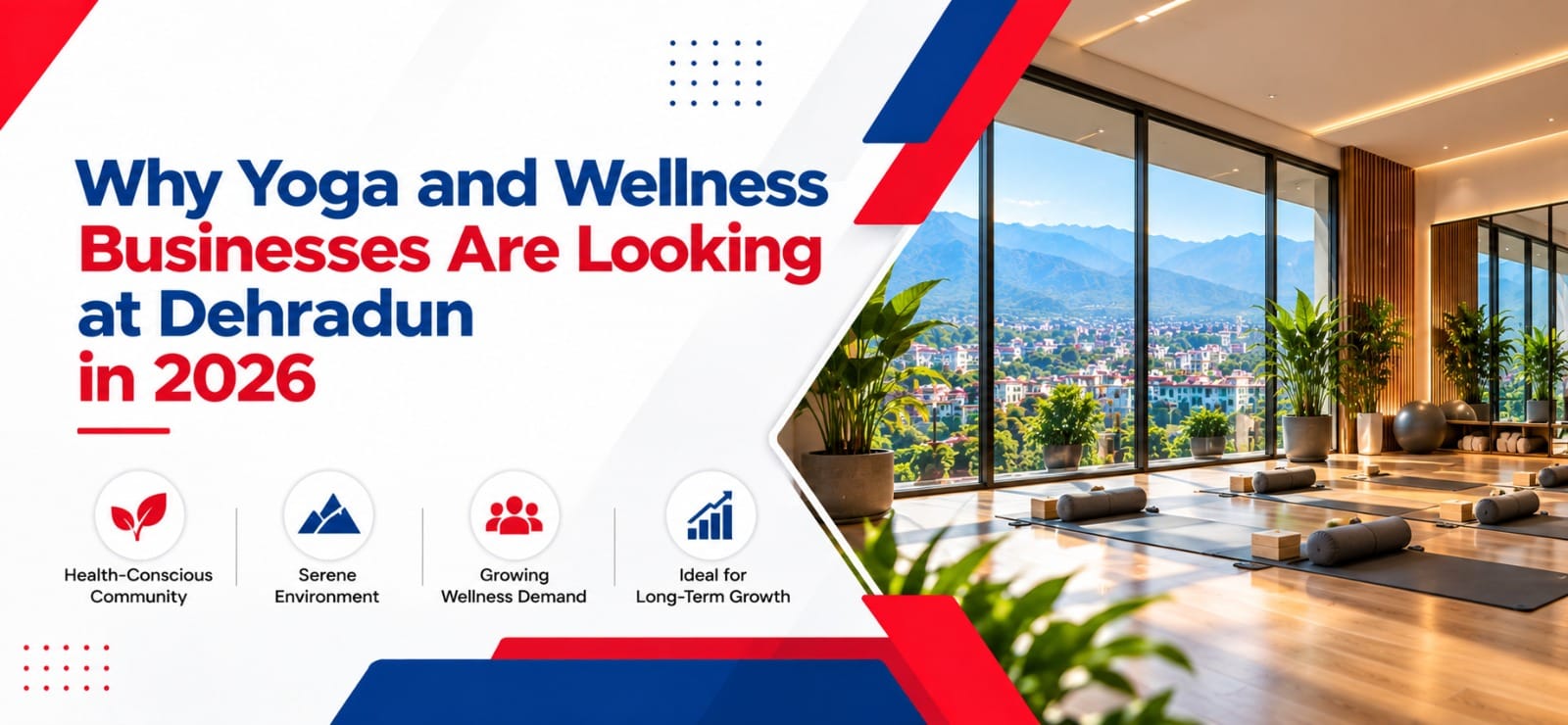
Why Yoga and Wellness Businesses Are Looking at Dehradun in 2026
The demand for wellness experiences has created opportunities for entrepreneurs interested in yoga studios, meditation centres, fitness programmes, and holistic wellness services. As people look for ways to incorporate physical activity, relaxation, and mindful living into their routines, wellness businesses are exploring locations that align with their services and target audiences.
Dehradun is an interesting location for this sector because of its educational institutions, residential neighbourhoods, established commercial areas, and proximity to the Himalayan foothills. Its connection with the wider Uttarakhand wellness and tourism ecosystem may also appeal to entrepreneurs planning specialised yoga and wellness experiences.
However, opening a successful wellness business requires more than selecting a peaceful location. Entrepreneurs must consider customer accessibility, suitable premises, rental costs, local competition, and the practical requirements of their services.
For business owners searching for Yoga Center space for rent in Dehradun, understanding these factors can help them identify a location that supports their business model and long-term plans.
1. Dehradun Offers a Distinctive Setting for Wellness Businesses
A wellness centre’s surroundings can influence the experience it offers customers. While some businesses focus on convenience and accessibility, others prioritise a calm environment for yoga, meditation, and relaxation.
Dehradun offers a combination of urban facilities and access to natural surroundings. This can provide opportunities for businesses serving local residents, working professionals, students, and visitors interested in wellness activities.
Entrepreneurs may consider different business models, including:
- Yoga studios offering group and individual classes.
- Meditation and mindfulness centres.
- Wellness studios combining yoga with mobility and stretching sessions.
- Specialised programmes for beginners and experienced practitioners.
- Wellness workshops and short-term retreats.
- Corporate wellness sessions for organisations.
Each model has different space and operational requirements. A small studio offering scheduled classes may need a different layout from a centre that combines yoga, consultations, workshops, and additional wellness services. The key is to identify the intended customer base before choosing the premises.
2. Growing Interest in Wellness Creates Business Opportunities
Yoga and wellness services can appeal to people with different routines and goals. Some customers may want to improve flexibility, while others may be interested in guided relaxation, group activities, or a structured fitness routine.
For entrepreneurs, this creates an opportunity to develop services around specific customer needs rather than trying to serve every segment of the market.
For example, a yoga studio might offer early-morning classes for working professionals, beginner sessions for new participants, or weekend workshops for people with busy weekday schedules.
Businesses may also explore partnerships with residential communities, educational institutions, hotels, and corporate organisations where appropriate.
However, growing interest in wellness should not be confused with guaranteed demand for a particular studio. Entrepreneurs should research local competitors, pricing, class schedules, and potential customer preferences before investing. A clear service offering and consistent customer experience are essential for building a sustainable business.
3. Choosing the Right Location Can Influence Customer Retention
Convenience is an important consideration when customers select a yoga studio or wellness centre. Even a well-designed space may struggle to attract regular visitors if it is difficult to reach or inconvenient for the intended audience. When comparing locations in Dehradun, entrepreneurs should consider the following factors:
- Residential catchment: A studio serving local residents may benefit from convenient access to nearby housing communities.
- Workplace accessibility: Centres targeting professionals may need to be accessible before or after typical working hours.
- Educational institutions: Studios targeting students or young adults may evaluate areas with suitable student populations.
- Transport and parking: Customers should be able to reach the premises conveniently, whether by public transport, private vehicle, or on foot.
- Neighbourhood atmosphere: Noise, congestion, and the surrounding environment should be compatible with the intended wellness experience.
- Visibility: A clearly identifiable entrance and suitable signage can help customers find the business.
Areas such as Rajpur Road, Sahastradhara Road, and GMS Road may be worth researching, depending on the business model and target audience. Their suitability will vary by exact location, rental cost, accessibility, and surrounding competition.
Visit shortlisted areas at the times your classes are likely to operate. This helps you assess real-world traffic, parking, noise, and customer convenience.
4. The Right Commercial Space Supports Better Classes
A yoga or wellness centre needs more than an attractive interior. The premises should support safe movement, comfortable participation, appropriate ventilation, and the practical requirements of the planned activities.
Before leasing a property, consider the number of participants you intend to accommodate and the amount of usable floor space required.
Your site inspection should cover:
- Open floor area: Ensure participants can move comfortably without crowding.
- Flooring: Check that the surface is even, suitable for the intended activities, and easy to maintain.
- Ventilation: Confirm that the space has adequate airflow.
- Natural light: Evaluate the availability of daylight and suitable lighting arrangements.
- Noise levels: Check whether traffic, neighbouring businesses, or building activities may interrupt sessions.
- Washrooms: Assess cleanliness, accessibility, and the number of facilities available.
- Storage: Allow space for yoga mats, props, cleaning supplies, and other equipment.
- Entry and circulation: Ensure participants can enter, leave, and move around safely.
If you plan to offer meditation or relaxation sessions, the acoustic environment may be particularly important. For businesses offering additional services, such as consultations or workshops, consider whether the layout can accommodate separate areas without compromising the main studio.
A suitable property should support the experience you want customers to have while remaining practical to operate and maintain.
5. Rental Costs and Lease Terms Need Careful Evaluation
Commercial rent can significantly influence the financial sustainability of a yoga or wellness business, especially during the early months when customer numbers may still be developing.
When exploring yoga studio premises, do not compare properties based on monthly rent alone. Evaluate the complete cost of leasing and preparing the space.
Your budget should include:
- Monthly rent and security deposit.
- Maintenance and common-area charges.
- Interior modifications and flooring.
- Lighting, ventilation, and electrical work.
- Mirrors, mats, props, and other equipment.
- Signage and branding.
- Applicable registrations and permissions.
- Staff costs, marketing, and working capital.
Before signing the lease, carefully review the agreement.
Confirm the permitted commercial use, lease duration, rent escalation, renewal conditions, security deposit refund terms, and responsibility for repairs. Also clarify whether the landlord permits the proposed interior modifications and installation of any additional facilities.
If you intend to conduct workshops, offer complementary services, or operate outside standard business hours, check that the lease and applicable building rules allow those activities.
A property with slightly higher rent may be more practical if it requires fewer modifications and offers better accessibility. Conversely, an expensive location may not be justified if the target customer base is limited.
6. Understand Local Competition Before Investing
Researching competing businesses can help entrepreneurs understand the existing wellness market and identify opportunities to differentiate their services.
Start by mapping yoga studios, fitness centres, meditation spaces, and related wellness businesses within the intended catchment area.
Look at their publicly available information, including:
- Types of classes and programmes offered.
- Pricing and membership options.
- Class schedules and operating hours.
- Customer reviews and recurring feedback.
- Facilities and studio atmosphere.
- Accessibility and parking arrangements.
The objective is not to copy another business. It is to understand what customers already have access to and where your proposed offering could provide something different.
For example, a studio might focus on small-group instruction, beginner-friendly classes, flexible schedules, or specialised workshops. Another may choose to serve a particular residential community or corporate customer segment.
Before committing to a long-term lease, test your business concept through customer surveys, introductory workshops, or discussions with potential partners where feasible.
This can provide useful early feedback without requiring a large initial investment.
7. Check Building Suitability and Applicable Permissions
Not every commercial property is automatically suitable for a yoga or wellness centre. Before signing a lease, confirm that the premises can legally and practically support the activities you intend to conduct.
Depending on the property and business model, relevant checks may include:
- Permitted land use and building occupancy.
- Applicable municipal or local business permissions.
- Fire-safety requirements, where applicable.
- Safe access, exits, and circulation.
- Electrical and ventilation arrangements.
- Signage permissions.
- Building management restrictions.
- Accessibility and sanitation provisions.
If your business will offer additional services such as physiotherapy, clinical treatments, or other regulated activities, separate professional and regulatory requirements may apply. Do not assume that a general wellness business licence covers every service.
For properties in Dehradun, consult the relevant authorities, including the Mussoorie Dehradun Development Authority where appropriate, to verify applicable planning and building requirements. It is also advisable to have the lease reviewed by a qualified professional before making a substantial financial commitment.
8. Wellness Businesses Can Explore Multiple Revenue Streams
A yoga studio does not necessarily need to rely on a single class format or membership type. Depending on the space, staff expertise, and customer demand, businesses may explore several complementary services.
Potential options include:
- Group classes: Scheduled sessions for beginners, intermediate participants, or specialised groups.
- Individual sessions: Personalised instruction for customers seeking more focused attention.
- Workshops: Short programmes around specific yoga practices, breathing techniques, or mindfulness activities.
- Corporate programmes: Sessions arranged for companies and employee groups.
- Membership packages: Monthly or multi-session plans designed around customer preferences.
- Community events: Introductory classes and wellness activities that help potential customers discover the studio.
Each offering should be introduced according to genuine demand, available expertise, and operational capacity. Entrepreneurs should also calculate the revenue generated per session and compare it with rent, instructor fees, utilities, marketing, and other expenses.
For example, a larger studio may accommodate more participants but also carry higher rental and maintenance costs. A smaller studio may have lower fixed expenses but limited capacity. The appropriate model depends on the relationship between customer demand, pricing, operating costs, and available space.
9. Create a Comfortable and Consistent Customer Experience
A wellness centre’s atmosphere can contribute to how customers perceive its services. Cleanliness, organisation, staff behaviour, and the quality of instruction all influence whether visitors return. When evaluating a potential property, think about the experience from the customer’s perspective.
Can visitors find the entrance easily? Is there enough space to remove shoes and store personal belongings? Are the washrooms clean and accessible? Can participants move comfortably between sessions?
Consider practical features such as:
- A clean and uncluttered entrance.
- Comfortable waiting arrangements.
- Organised storage for equipment.
- Suitable lighting and temperature control.
- Clear class schedules and booking procedures.
- Reliable cleaning and maintenance routines.
- Adequate privacy for the intended services.
Avoid spending heavily on decorative interiors before confirming the property’s essential requirements. A calm, functional studio with good ventilation, suitable flooring, and effective class management may be more useful than an elaborate design that is difficult to maintain. The goal is to create an environment that supports the business’s purpose and the needs of its customers.
10. Plan for Long-Term Business Sustainability
Opening a yoga or wellness centre requires ongoing management beyond finding a suitable location. Entrepreneurs should prepare a realistic operating plan before signing a lease.
Estimate the number of paying participants needed to cover monthly expenses. Include rent, instructor payments, utilities, cleaning, marketing, equipment replacement, and other recurring costs.
Also consider how the business will respond to quieter periods, changes in customer preferences, and competition from online classes or other fitness options.
Before making a final decision, ask yourself:
- Is there a clear target audience for the proposed services?
- Does the location offer convenient access to that audience?
- Can the business afford the rent during its initial months?
- Does the property meet the requirements of the planned activities?
- Are the lease terms suitable for the expected business timeline?
- Can the studio differentiate itself from existing alternatives?
- Have the relevant legal and operational requirements been checked?
A measured approach can help entrepreneurs avoid committing to an expensive space before validating their business concept.
Conclusion
Dehradun offers several factors that may interest yoga and wellness entrepreneurs, including established residential neighbourhoods, commercial infrastructure, and proximity to Uttarakhand’s broader wellness and tourism ecosystem. However, a successful business depends on selecting the right location, understanding customer demand, controlling costs, and delivering consistent services.
For entrepreneurs searching for Yoga Center space for rent in Dehradun, the most important step is to evaluate the premises according to the intended business model. Consider accessibility, usable floor area, ventilation, rental terms, building suitability, and the needs of your target customers before making a commitment.
A carefully selected commercial space can provide a practical foundation for a yoga studio or wellness centre. Combine that choice with a clear business plan, suitable instructors, and a customer-focused approach to build a business designed for long-term sustainability.

Rajan
WFECity’s editorial team shares practical insights about office spaces, commercial real estate, amenities and business growth in Dehradun.
You May Also Like

Commercial Real Estate
Why Cloud Kitchens Are the Smartest Investment for Food Entrepreneurs in 2026
Oct 12, 2026
Commercial Real Estate
Benefits of Renting Office Space at Work, Food & Entertainment City – Office Space for Rent in Dehradun
Feb 19, 2026
Commercial Real Estate