
Commercial Real Estate
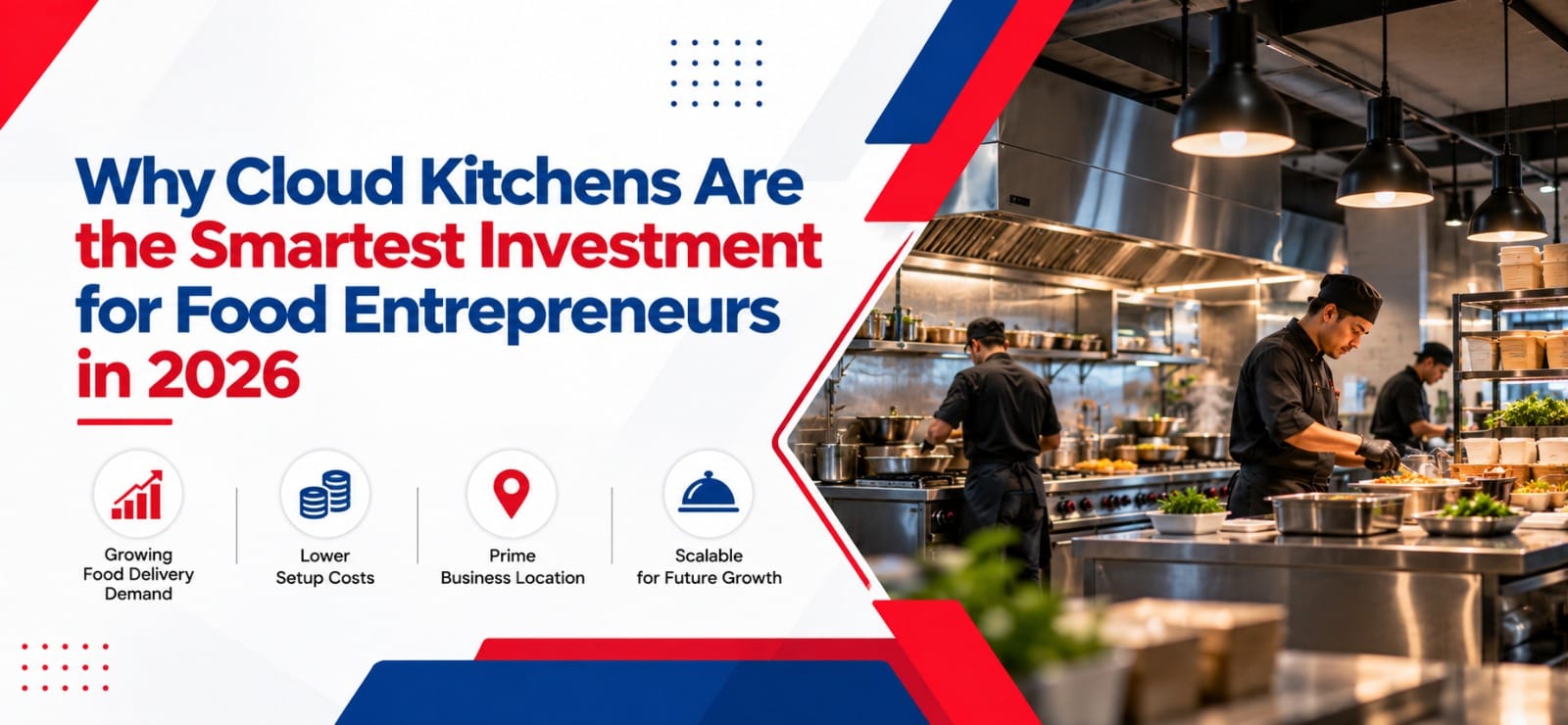
Why Cloud Kitchens Are the Smartest Investment for Food Entrepreneurs in 2026
The food business is evolving rapidly as consumers increasingly discover restaurants, compare menus, and order meals through online platforms. For aspiring food entrepreneurs, this shift has created opportunities to build delivery-focused food businesses without investing in a traditional dine-in restaurant.
Cloud kitchens have emerged as an alternative for entrepreneurs who want to focus on food preparation, online orders, and delivery operations. With no conventional dining area to maintain, these businesses can allocate more attention to kitchen efficiency, menu development, packaging, and customer experience.
In 2026, entrepreneurs exploring the food industry may find cloud kitchens worth considering because of their flexible operating models and potential to serve customers across multiple delivery channels. However, success depends on more than choosing a delivery platform. Location, food quality, operating costs, licensing, and consistent demand all play important roles.
For entrepreneurs planning to enter the food industry in Uttarakhand, understanding these factors can help determine whether a cloud kitchen is the right business opportunity.
1. Lower Initial Investment Compared With Traditional Restaurants
One of the main attractions of a cloud kitchen is the possibility of starting without a conventional dining area. A traditional restaurant may require expenditure on customer seating, interior decoration, front-of-house staff, and other facilities associated with dine-in service.
A cloud kitchen can operate from a suitable commercial kitchen designed primarily for food preparation and delivery.
Depending on the business model, entrepreneurs may be able to reduce expenditure on:
- Dining furniture and customer seating.
- Front-of-house interiors and decoration.
- Large customer-facing spaces.
- Dine-in service equipment.
- Certain staffing and hospitality requirements.
However, a cloud kitchen still requires investment in cooking equipment, refrigeration, ventilation, storage, food preparation surfaces, packaging, technology, and hygiene management.
The actual investment depends on the menu, kitchen size, equipment requirements, property condition, and scale of operations.
Entrepreneurs should prepare a detailed budget covering the initial setup, rental deposit, monthly rent, staff salaries, ingredients, utilities, packaging, delivery-platform charges, marketing, and working capital.
A lower-cost setup can make entry more accessible, but profitability still depends on maintaining healthy margins and generating sufficient order volume.
2. Growing Opportunities in Online Food Delivery
Online food ordering gives cloud kitchens access to customers who may never visit a physical restaurant. Entrepreneurs can reach people at home, in offices, and in other locations served by their delivery arrangements.
This model can be particularly useful for businesses that specialise in a specific cuisine or food category.
For example, a cloud kitchen may focus on:
- North Indian meals and thalis.
- Biryani and rice-based dishes.
- Burgers, sandwiches, and wraps.
- Healthy meals and customised food options.
- Regional cuisines and home-style cooking.
- Desserts, bakery products, and snacks.
Rather than attempting to serve every customer segment, entrepreneurs can build a menu around a clear target audience.
Online ordering platforms may help businesses reach existing food-ordering customers, while direct ordering channels and social media can support customer retention.
However, demand differs by neighbourhood, cuisine, price range, and competition. Before launching, entrepreneurs should research local ordering patterns and determine whether the intended menu has a realistic customer base.
3. Flexibility to Test Different Food Concepts
A cloud kitchen can provide entrepreneurs with an opportunity to test a food concept before committing to a larger restaurant operation.
For example, a business may begin with a focused menu of ten to fifteen dishes, study customer feedback, and gradually introduce additional items based on sales performance.
This approach allows the entrepreneur to evaluate:
- Which dishes generate the most orders.
- Which menu items deliver stronger profit margins.
- How customers respond to pricing.
- Which packaging options maintain food quality.
- Whether demand changes by day or time.
- Which products encourage repeat purchases.
Some operators also experiment with multiple virtual food brands from one kitchen. This approach requires careful operational planning, food safety controls, appropriate platform compliance, and sufficient kitchen capacity.
The key is to test new ideas using actual order data rather than expanding the menu simply to offer more choices.
A focused operating model can help reduce ingredient waste, simplify inventory management, and improve consistency.
4. Why Location Still Matters for a Cloud Kitchen
Although cloud kitchens do not depend on walk-in customers in the same way as traditional restaurants, their location remains an important business decision.
A suitable location can influence delivery times, access to ingredients, staff convenience, rental costs, and the number of customers the kitchen can serve efficiently.
Entrepreneurs searching for cloud kitchen space for rent in Dehradun should evaluate more than the property’s monthly rent.
Consider the following factors before selecting a commercial property.
Delivery coverage
Study the neighbourhoods that can be served within a practical delivery radius. Check actual travel times, traffic patterns, and the availability of delivery partners.
Road accessibility
The kitchen should be reasonably accessible to delivery riders, suppliers, and employees. Loading and unloading arrangements can also affect daily operations.
Kitchen suitability
Verify whether the premises can accommodate cooking equipment, food preparation stations, storage, refrigeration, and packaging activities.
Ventilation and exhaust
Commercial cooking may require appropriate exhaust systems, ventilation, and arrangements for managing heat, smoke, and odours. Confirm that the building can legally and technically support the intended installation.
Water supply and drainage
Reliable water, suitable drainage, and adequate cleaning facilities are essential for daily food preparation and sanitation.
Electrical and gas requirements
Assess the electrical load, permitted fuel arrangements, and requirements for safe installation and operation of equipment.
Rental terms
Review the lease duration, security deposit, permitted use, maintenance responsibilities, rent escalation clauses, and restrictions on alterations.
A property that appears inexpensive may become costly if it requires extensive modifications or cannot support the intended kitchen operations.
5. Cloud Kitchens Can Support Multiple Revenue Channels
A cloud kitchen does not necessarily need to depend on a single online food delivery platform.
Depending on its business model, it may generate orders through several channels.
Third-party delivery platforms: These can provide access to customers already using online ordering services, subject to platform eligibility and commercial terms.
Direct online orders: A business website or ordering system can help customers place orders directly.
Social media enquiries: Local social media marketing can introduce the brand to nearby customers and encourage repeat orders through permitted ordering channels.
Corporate meal orders: Offices and businesses may require recurring lunches, snacks, or meal packages.
Bulk and event orders: Depending on kitchen capacity and applicable permissions, the business may accept larger orders for gatherings and other occasions.
Each channel has different operating requirements and acquisition costs. Third-party platforms may charge commissions and other fees, while direct orders require the business to manage customer acquisition, payment processing, and delivery arrangements.
Entrepreneurs should calculate the contribution margin for each channel to understand which orders are genuinely profitable.
6. Technology Can Improve Kitchen Efficiency
Technology plays an important role in managing a delivery-focused food business. Even a small kitchen may need systems to organise orders, monitor inventory, track costs, and maintain consistent service.
Useful tools and processes include:
- Digital order management.
- Inventory and ingredient tracking.
- Standardised recipes and portion sizes.
- Sales and menu performance reporting.
- Customer feedback monitoring.
- Digital payment and billing systems.
- Order preparation and dispatch tracking.
For example, a kitchen can review sales reports to identify slow-moving dishes and reduce unnecessary ingredient purchases.
Standardised recipes can help maintain portion consistency and make food costs easier to calculate. Clear preparation workflows can also reduce delays during busy periods.
Technology does not replace good kitchen management, but it can help entrepreneurs make decisions using reliable operational information.
7. Food Safety and Licensing Must Be Planned From the Beginning
A cloud kitchen is a food business and must comply with the legal and operational requirements applicable to its activities.
Before starting operations, entrepreneurs should determine which registrations, licences, and approvals are required for their business model and premises.
Important considerations include:
- FSSAI registration or licence: Obtain the appropriate food safety registration or licence for the business, based on the applicable eligibility criteria.
- Commercial property use: Confirm that the premises permit the intended food preparation and commercial activity.
- Local permissions: Check the applicable municipal, trade, building, and other local requirements.
- Fire and safety arrangements: Verify the requirements applicable to the building, cooking equipment, fuel systems, and kitchen layout.
- Hygiene and sanitation: Establish appropriate cleaning, pest control, food storage, and waste management procedures.
- Employment compliance: Review the requirements applicable to employees and the operating business.
The exact requirements depend on the premises, business structure, scale of operations, and applicable regulations.
In Dehradun, entrepreneurs should verify relevant requirements with the appropriate authorities before signing a lease or investing in kitchen modifications.
A property owner’s verbal assurance that a space can be used as a cloud kitchen should not replace independent verification.
8. Understand the Costs Before Estimating Profitability
Cloud kitchens can have lower front-of-house costs than conventional restaurants, but they still face several recurring expenses.
A realistic financial model should include the following:
| Cost category | Examples |
| Property | Rent, deposit, and maintenance |
| Setup | Kitchen equipment, exhaust, and fit-outs |
| Ingredients | Raw materials, condiments, and cooking supplies |
| Staffing | Chefs, kitchen assistants, and cleaning staff |
| Packaging | Food containers, bags, labels, and seals |
| Utilities | Electricity, water, fuel, and internet |
| Delivery | Platform commissions and delivery-related costs |
| Marketing | Promotions, advertising, and customer acquisition |
| Compliance | Applicable registrations, inspections, and professional fees |
| Working capital | Funds for recurring expenses and unexpected costs |
Entrepreneurs should calculate the contribution margin per order after accounting for ingredients, packaging, platform charges, and other order-related costs.
They should then estimate how many orders are needed to cover fixed monthly expenses such as rent, salaries, and utilities.
For example, if a kitchen’s fixed monthly expenses are ₹1,20,000 and its average contribution per order is ₹100, it would need approximately 1,200 orders per month to cover those fixed expenses, assuming the contribution estimate already includes all relevant variable costs.
That is approximately 40 orders per day over a 30-day operating month. This is an illustrative calculation, not a forecast of actual cloud kitchen performance.
The purpose of this exercise is to understand the sales volume required for financial sustainability before committing to the business.
9. How to Choose the Right Commercial Space in Dehradun
Selecting a suitable property is one of the most important steps when establishing a cloud kitchen.
The premises should support the menu, expected order volume, kitchen workflow, safety requirements, and delivery operations.
Before finalising a property, assess these practical considerations:
Kitchen layout: Ensure that food preparation, cooking, washing, storage, and packaging can be organised efficiently.
Floor area: Choose a space that accommodates the equipment and staff required for the planned menu without paying for unnecessary space.
Utility capacity: Confirm the availability and capacity of water, drainage, electricity, and other essential services.
Exhaust and ventilation: Determine whether suitable systems can be installed and operated in accordance with applicable requirements.
Supplier access: Check whether vendors can deliver ingredients conveniently and whether there is sufficient storage.
Delivery operations: Assess access for riders and the arrangements for handling multiple orders during peak periods.
Lease conditions: Confirm permitted use, modification rights, maintenance obligations, deposit terms, and the process for ending or renewing the lease.
Neighbourhood suitability: Consider noise, odour, waste disposal, traffic, and any building restrictions that may affect operations.
For entrepreneurs who are still comparing options, a structured property shortlist can make the decision easier. Compare each space according to rent, setup costs, delivery coverage, utility capacity, and compliance requirements rather than choosing solely on price.
10. Is a Cloud Kitchen the Right Investment for You in 2026?
A cloud kitchen may be worth considering if you have a clear food concept, understand your target customers, and can manage daily operations efficiently.
It may suit entrepreneurs who want to test a delivery-focused model, specialise in a particular cuisine, or build a food brand without operating a conventional dining area.
However, the business is not automatically low-risk or profitable. Strong competition, high platform charges, ingredient price fluctuations, inconsistent demand, poor customer reviews, and delivery delays can affect results.
Before investing, ask yourself:
- Is there sufficient local demand for my proposed cuisine?
- Can I differentiate my menu from competing businesses?
- Have I calculated realistic setup and monthly operating costs?
- Can I secure a suitable property with the required permissions?
- Do I understand food safety and licensing obligations?
- Can the business remain financially viable if orders grow more slowly than expected?
If these questions can be answered with credible research and realistic financial estimates, a cloud kitchen may provide a practical route into the food industry.
Conclusion
Cloud kitchens offer food entrepreneurs an alternative to traditional dine-in restaurants by focusing on food preparation, online ordering, and delivery operations. Their flexibility, potential to test different food concepts, and access to digital ordering channels make them worth evaluating in 2026.
However, success depends on much more than a promising idea. Entrepreneurs need a clear business plan, consistent food quality, effective cost management, suitable commercial premises, and compliance with applicable food safety and local requirements.
For anyone exploring cloud kitchen space for rent in Dehradun, the first step is to evaluate the property’s suitability for kitchen operations, delivery coverage, utilities, lease terms, and required approvals.
With careful planning and realistic financial projections, food entrepreneurs can make a more informed decision about whether this business model fits their goals.

Rajan
WFECity’s editorial team shares practical insights about office spaces, commercial real estate, amenities and business growth in Dehradun.
You May Also Like

Commercial Real Estate
Why Yoga and Wellness Businesses Are Looking at Dehradun in 2026
Oct 14, 2026
Commercial Real Estate
Benefits of Renting Office Space at Work, Food & Entertainment City – Office Space for Rent in Dehradun
Feb 19, 2026
Commercial Real Estate