
Workplace & Lifestyle
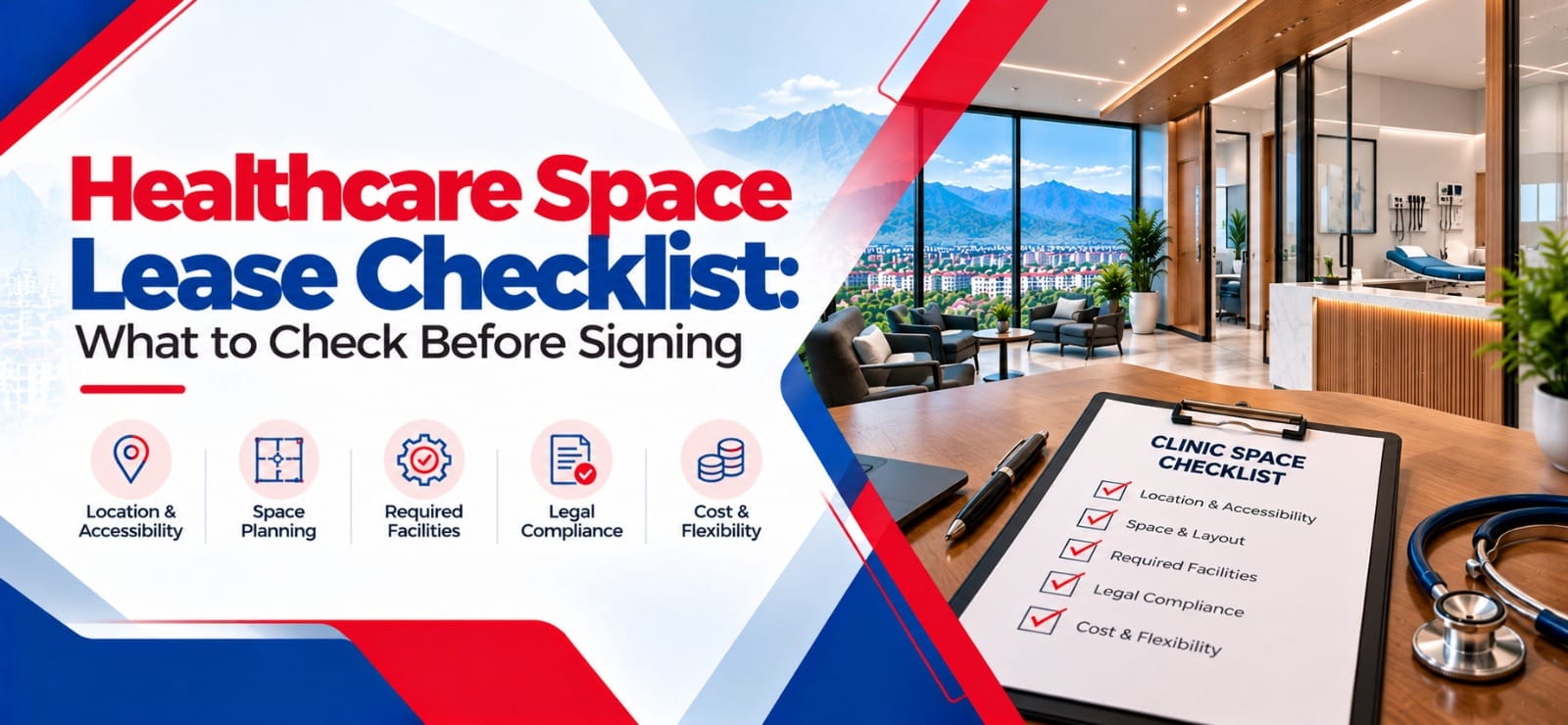
Healthcare Space Lease Checklist: What to Check Before Signing
Finding the right commercial property is an important step when opening a clinic, diagnostic centre, dental practice, physiotherapy centre or other healthcare facility. But choosing a suitable property is only the beginning.
Before signing a lease, healthcare businesses need to examine much more than the monthly rent. The property’s permitted use, accessibility, infrastructure, layout, maintenance responsibilities and lease conditions can all affect how easily the space can be converted into a functional healthcare facility.
For doctors, healthcare entrepreneurs and medical service providers looking for a healthcare space for lease in Dehradun, reviewing these details before signing can help reduce unexpected costs and operational complications later.
Here is a practical checklist to follow before finalising a healthcare commercial space.
1. Confirm That Healthcare Use Is Permitted
The first question should be whether the property can actually be used for the healthcare activity you intend to operate.
A commercial property may be suitable for offices or retail businesses but have different requirements for clinics, diagnostic centres or treatment facilities.
Before signing, confirm:
- Permitted use of the premises
- Building usage restrictions
- Landlord approval for healthcare operations
- Any restrictions imposed by building management
- Whether your specific type of medical practice is permitted
The intended use should be clearly understood before you invest in interiors, equipment or branding.
2. Understand the Complete Lease Cost
Monthly rent is only one part of the financial commitment.
Ask for a complete breakdown of all costs associated with the property.
This may include:
- Monthly rent
- Security deposit
- Maintenance charges
- Common-area charges
- Parking charges
- Utility expenses
- Property-related taxes, where applicable
- Additional service charges
Understanding the complete cost can help you compare different healthcare spaces for lease in Dehradun on a more realistic basis.
A property with a lower advertised rent may have additional costs that significantly change the overall monthly expense.
3. Check the Lease Duration and Lock-In Period
Healthcare businesses can require substantial investment in interiors, equipment and patient facilities.
Because of this, the lease period needs careful consideration.
Review:
- Total lease duration
- Lock-in period
- Renewal options
- Notice period
- Early termination conditions
- Exit clauses
A lease that is too short may make it difficult to recover the investment made in setting up the facility, while an overly restrictive agreement may reduce flexibility if business requirements change.
4. Understand Rent Escalation
Commercial leases often include provisions for rent increases during the lease period.
Before signing, understand:
- When the rent will increase
- How the increase will be calculated
- Whether the escalation is fixed or percentage-based
- Whether maintenance charges can also change
This is important when preparing a multi-year financial plan for the clinic or healthcare business.
5. Check the Property’s Accessibility
Healthcare properties need to be convenient for a wide range of patients.
Some visitors may be elderly, injured, using mobility aids or accompanying children.
Inspect:
- Entrance steps
- Ramps
- Lifts
- Staircases
- Door widths
- Corridors
- Accessible parking
- Washroom accessibility
When evaluating a healthcare space in Dehradun, do not assess accessibility only from the perspective of an able-bodied visitor.
Think about the experience of a patient who may have difficulty walking or standing for long periods.
6. Evaluate Parking Availability
Parking can become a practical issue for clinics and healthcare facilities.
Patients may arrive with family members or require additional assistance. Diagnostic centres and specialist clinics can also receive visitors from outside the immediate neighbourhood.
Check:
- Number of parking spaces
- Car parking
- Two-wheeler parking
- Visitor parking
- Peak-hour availability
- Parking charges
- Distance between parking and entrance
If dedicated parking is not available, identify nearby alternatives before signing the lease.
7. Inspect the Internal Layout
A healthcare facility needs more than an open floor.
Depending on the speciality, you may require space for:
- Reception
- Waiting area
- Consultation rooms
- Examination rooms
- Treatment rooms
- Procedure areas
- Storage
- Staff areas
- Washrooms
Before signing the lease, prepare a basic floor plan and determine whether the space can accommodate your planned layout.
Pay attention to columns, staircases, utility areas and other permanent structures that could restrict interior planning.
8. Consider Patient Privacy
Privacy is an important part of the healthcare environment.
The layout should allow consultation and treatment areas to be separated appropriately from reception and waiting spaces.
Check whether the property can accommodate:
- Private consultation rooms
- Separate patient movement where required
- Appropriate doors and partitions
- Confidential discussions
- Staff-only areas
The more specialised the healthcare facility, the more important detailed space planning can become.
9. Check Electrical Capacity
Healthcare facilities can have significant electrical requirements depending on the equipment being installed.
Before signing, understand the property’s:
- Sanctioned electrical load
- Wiring condition
- Electrical panel capacity
- Number of power points
- Earthing
- Backup power
- Generator facilities
If you are planning to install diagnostic or specialised medical equipment, obtain the equipment’s electrical requirements and confirm whether the property can support them.
10. Assess Power Backup
A power interruption can affect lighting, computers, air conditioning and certain medical equipment.
Ask the property owner or building management:
- Is generator backup available?
- Which areas are connected to backup power?
- Is there a separate backup system?
- What happens during prolonged outages?
- Are additional backup arrangements permitted?
The answer may be particularly important for healthcare businesses that depend on continuous operation of specific equipment.
11. Check Water Supply and Drainage
Water and drainage requirements vary significantly between different healthcare businesses.
A general consultation clinic may have relatively straightforward requirements, while dental practices, diagnostic centres and treatment facilities may require more extensive plumbing.
Inspect:
- Water supply
- Water pressure
- Washrooms
- Drainage
- Plumbing condition
- Scope for additional connections
If modifications are required, clarify who will pay for the work and whether landlord approval is necessary.
12. Examine Ventilation and Air Conditioning
Patient comfort and indoor air quality are important considerations.
Before finalising a healthcare space for lease in Dehradun, inspect:
- Natural ventilation
- Air-conditioning capacity
- HVAC infrastructure
- Exhaust arrangements
- Window placement
- Air circulation
The requirements will depend on the type of healthcare service being provided, so evaluate the space according to your specific operational needs.
13. Check Internet and Communication Infrastructure
Modern healthcare practices often depend on digital systems for appointments, billing, records, communication and other administrative tasks.
Check whether the property has:
- Reliable internet connectivity
- Suitable wiring
- Mobile network coverage
- Telephone infrastructure where required
If your practice depends heavily on digital systems, reliable connectivity should be treated as an operational requirement rather than an optional facility.
14. Review Maintenance Responsibilities
One of the most commonly overlooked parts of a commercial lease is maintenance responsibility.
The agreement should make it clear who handles:
- Plumbing repairs
- Electrical repairs
- Air-conditioning maintenance
- Common areas
- Building maintenance
- Security
- Cleaning
- Structural repairs
Clarify these responsibilities before signing rather than dealing with them after a problem occurs.
15. Check Modification and Interior Permissions
Healthcare spaces often require specialised interiors.
You may need to install:
- Partitions
- Consultation rooms
- Lighting
- Medical equipment
- Plumbing
- Electrical points
- Signage
- Reception counters
- Storage systems
Before signing the lease, confirm what modifications are permitted and whether written approval is required.
Also understand what happens to permanent improvements when the lease ends.
16. Understand Signage Rights
Patients need to be able to identify your clinic easily.
Check whether you can install:
- Main signage
- Building directory signage
- Directional signs
- Reception branding
- Window graphics
Ask about restrictions on size, placement and lighting.
If the property is part of a commercial development, signage rules may be managed at the building or development level.
17. Check Operating Hours
Not every healthcare business operates on a standard 9-to-5 schedule.
Some clinics may have:
- Early morning appointments
- Evening consultations
- Weekend appointments
- Emergency or extended services
Before signing the agreement, confirm whether the property allows your intended operating hours.
Also check building security arrangements and access policies outside standard commercial hours.
18. Review Fire and Safety Provisions
Healthcare facilities should pay close attention to building safety arrangements.
Depending on the property and nature of the healthcare operation, check the availability and condition of:
- Fire exits
- Fire extinguishers
- Fire detection systems
- Emergency lighting
- Clearly marked evacuation routes
- Building safety systems
Specific regulatory requirements can vary depending on the type and size of the facility. Verify applicable requirements with the relevant authorities and qualified professionals before opening.
19. Consider the Surrounding Environment
The property itself may be suitable, but the surrounding environment also matters.
Before leasing a healthcare space, observe:
- Traffic
- Noise
- Cleanliness
- Nearby businesses
- Pedestrian movement
- Public transportation
- General accessibility
A peaceful and organised environment may be preferable for certain healthcare practices, while high visibility and footfall may be more relevant for others. The right surroundings depend on the type of service you provide.
20. Evaluate the Location From the Patient’s Perspective
Before signing, make the journey yourself. Travel to the property using the same methods your patients are likely to use.
Check:
- How easy it is to find
- How long the journey takes
- Where patients can park
- How far they need to walk
- Whether the entrance is obvious
- Whether lifts or stairs are convenient
This simple exercise can reveal accessibility issues that may not be obvious during a property viewing.
21. Think About Future Expansion
Healthcare practices can evolve.
A clinic may start with one doctor and later add additional specialists, consultation rooms, diagnostic services or support staff.
When evaluating a healthcare space in Dehradun, consider whether the property can accommodate reasonable future expansion.
Ask:
- Can additional rooms be created?
- Is there unused space?
- Can infrastructure be upgraded?
- Is an adjacent unit available?
- Can signage be expanded?
- Can parking support increased patient volume?
A flexible property can be useful if your practice grows over time.
22. Review the Lease With Professional Advice
Commercial lease agreements can contain detailed clauses relating to rent, maintenance, termination, modifications and responsibilities.
Before signing a long-term agreement, consider having the document reviewed by a qualified legal professional.
Pay particular attention to:
- Rent and escalation
- Security deposit
- Lock-in period
- Renewal
- Termination
- Maintenance
- Repairs
- Insurance responsibilities
- Permitted use
- Subleasing or assignment
- Restoration obligations
Understanding these terms before signing can help prevent disputes later.
Why the Right Commercial Development Matters
The quality of the commercial environment can influence how easily a healthcare business operates.
A professionally planned commercial development can provide a structured setting with organised access, parking, infrastructure and surrounding business activity. These factors can be particularly useful when evaluating a healthcare space for lease in Dehradun.
For doctors and healthcare entrepreneurs exploring commercial property, WFE City can be considered as one option based on the specific requirements of the proposed clinic or healthcare business. Available space, accessibility, infrastructure, parking and suitability for the intended use should all be evaluated before making a final decision.
The goal is not simply to find an available unit. It is to find a space that works for patients, staff and the long-term needs of the healthcare practice.
Conclusion
Leasing a healthcare space involves more than agreeing on rent and signing paperwork. The property needs to support patient accessibility, privacy, safety, staff operations and the practical requirements of the healthcare service.
Before signing a healthcare space lease in Dehradun, review the permitted use, accessibility, parking, floor plan, electrical and plumbing infrastructure, modification permissions, maintenance responsibilities and lease conditions.
Taking the time to inspect these details before committing can help reduce unexpected expenses and make the transition from commercial property to functioning healthcare facility much smoother.
For healthcare professionals searching for healthcare space for lease in Dehradun, developments such as WFE City can be explored alongside other suitable commercial options. A careful comparison of location, infrastructure, accessibility, cost and lease terms can help you identify a property that supports your practice today while leaving room for tomorrow’s growth.

Rajan
WFECity’s editorial team shares practical insights about office spaces, commercial real estate, amenities and business growth in Dehradun.
You May Also Like
Workplace & Lifestyle
Top Amenities to Look For Before Renting Office Space in Dehradun
Oct 16, 2026
Workplace & Lifestyle
What Makes Dehradun a Smart Choice for Renting Yoga Centre Space?
Oct 15, 2026